Pellet Stove Maintenance and Lung Health: A Comprehensive Guide

pellet stove maintenance and lung health a comprehensive gui 1 landscape

For homeowners, renters, and building managers who rely on pellet stoves for heat, this is for you — especially if you’ve been worrying about coughing, persistent dust, or worsening allergies when the stove’s running. You might not know whether your maintenance routine is enough to protect indoor air quality and respiratory health (and that uncertainty is stressful). Our technicians help people with practical, step-by-step maintenance plans, safety checks, and ventilation fixes so you can keep the warmth without trading it for poor lung health — no hard sell, just real, actionable support.

How can a pellet stove affect lung health and indoor air quality?

Short answer: through fine particles, gases, and poor circulation. Pellet stoves produce combustion byproducts — tiny particulates (PM2.5), carbon monoxide (CO), and some volatile organic compounds (VOCs) — and if the stove, venting, or room airflow aren’t right, those pollutants can build up indoors.

Why care? PM2.5 is the biggest issue: these particles are small enough to reach deep into the lungs and even the bloodstream. The EPA sets a 24-hour PM2.5 standard of 35 µg/m3 — a useful benchmark when you’re checking air quality. I’ve noticed in tight homes with dirty vents that indoor PM2.5 can spike well above that during startup and when ash is disturbed (that’s when people cough).

Common symptoms and risks

  • Short-term: coughing, wheeze, eye irritation, headaches, throat scratchiness.
  • Long-term: worsening asthma, bronchitis flare-ups, and other respiratory conditions — especially for kids, older adults, and people with preexisting lung disease.
  • Warning signs: soot on walls, lingering smoke smell, frequent filter clogging, or a carbon monoxide alarm going off.

Pellet stove maintenance checklist to protect lung health

Think of maintenance like preventive medicine. It’s better to do regular small tasks than to wait for a problem that costs an arm and a leg.
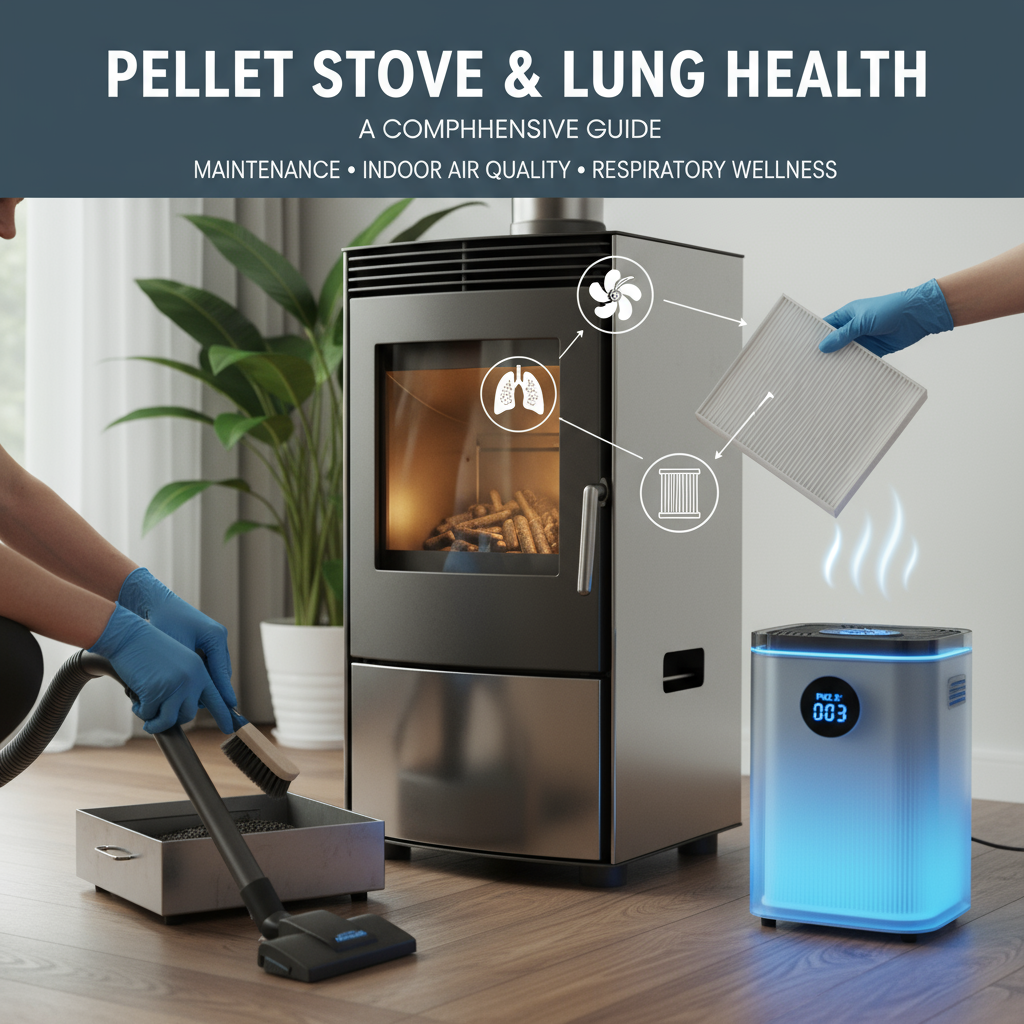
 

Image about Pellet Stove Maintenance and Lung Health: A Comprehensive Guide


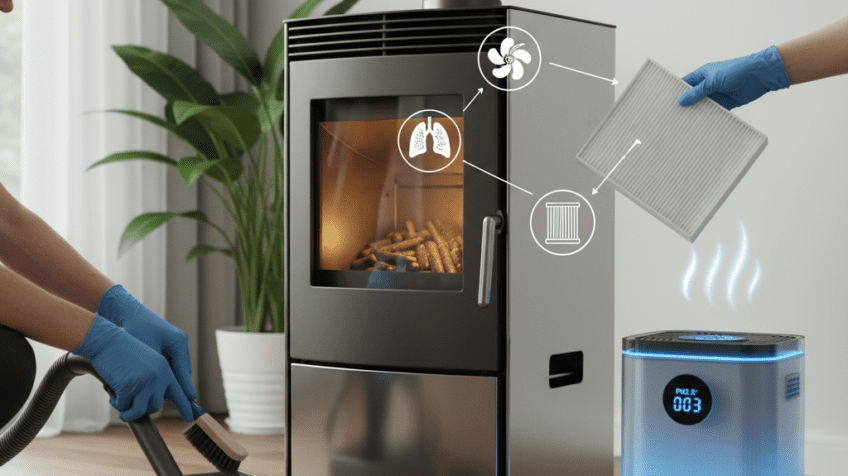
  • Daily: Empty the burn pot and remove large clinker chunks — 1 minute when the stove’s cool.
  • Weekly: Remove ash from the firebox and ash drawer. Use a HEPA-rated shop vac or vacuum designed for ash (never a household vacuum).
  • Monthly: Clean or vacuum the stove’s convection air channels and heat exchanger (if accessible). Check gaskets for wear.
  • Every 6–12 months: Deep clean the exhaust vent and chimney; inspect for creosote or blockages. Replace worn door gaskets and blower seals.
  • Annually: Have a qualified technician perform a full safety inspection — combustion efficiency, vent integrity, pellet feed system, and CO testing.

Step-by-step: safe cleaning that reduces indoor dust

So here’s the thing about cleaning — do it wrong and you’ll release a cloud of fine ash. Do it right and your air stays clean.

  1. Turn the stove off and let it cool for at least 4 hours (overnight is better).
  2. Wear an N95 mask, gloves, and eye protection (don’t skip this).
  3. Empty ash into a metal container with a lid; store outside until fully cool — ash can smolder for days.
  4. Use a HEPA-rated ash vacuum for the firebox and vents; wipe surfaces with a damp cloth to catch residual dust.
  5. Inspect door gaskets and seals — replace if brittle or compressed (a poor seal raises emissions).

Filter replacement: which filters matter and how often?

Filter work divides into two camps: the stove’s internal filters/blowers and the home’s air filters.
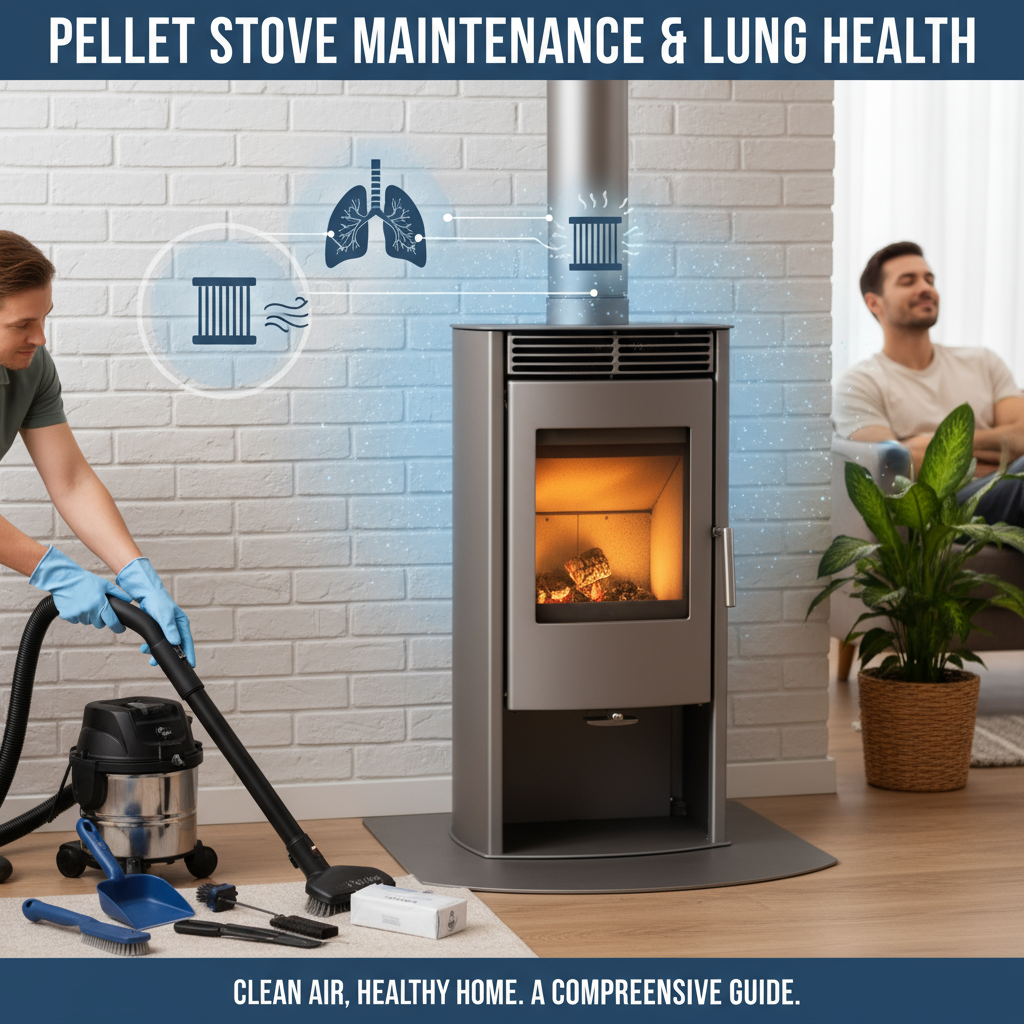
 

Image about Pellet Stove Maintenance and Lung Health: A Comprehensive Guide


  • Stove blower filters: Some stoves have intake or blower filters — vacuum monthly and replace every 3 months or as the manual recommends. If you see visible dust after one month, shorten the interval to 6 weeks.
  • Home HVAC filters: Use at least a MERV 8 for basic protection, MERV 13 or a true HEPA if someone has asthma. Replace HVAC filters every 90 days or sooner if you have pets or heavy stove use.
  • Portable air purifiers: If you run a portable HEPA purifier in the room with the stove, replace its filter per the manufacturer (often every 6–12 months) and keep CADR suited to room size.

From what I’ve seen, a simple change like swapping to a MERV 13 HVAC filter plus a small HEPA purifier cuts indoor PM2.5 dramatically — it’s like choosing between a Ferrari and a bicycle for filtration (the Ferrari being the HEPA). People notice fewer sneezes within days.

Ventilation upgrades and quick fixes for safer air

Ventilation is where a lot of homes cut corners. The exhaust must get outside, and fresh air must replace what leaves.
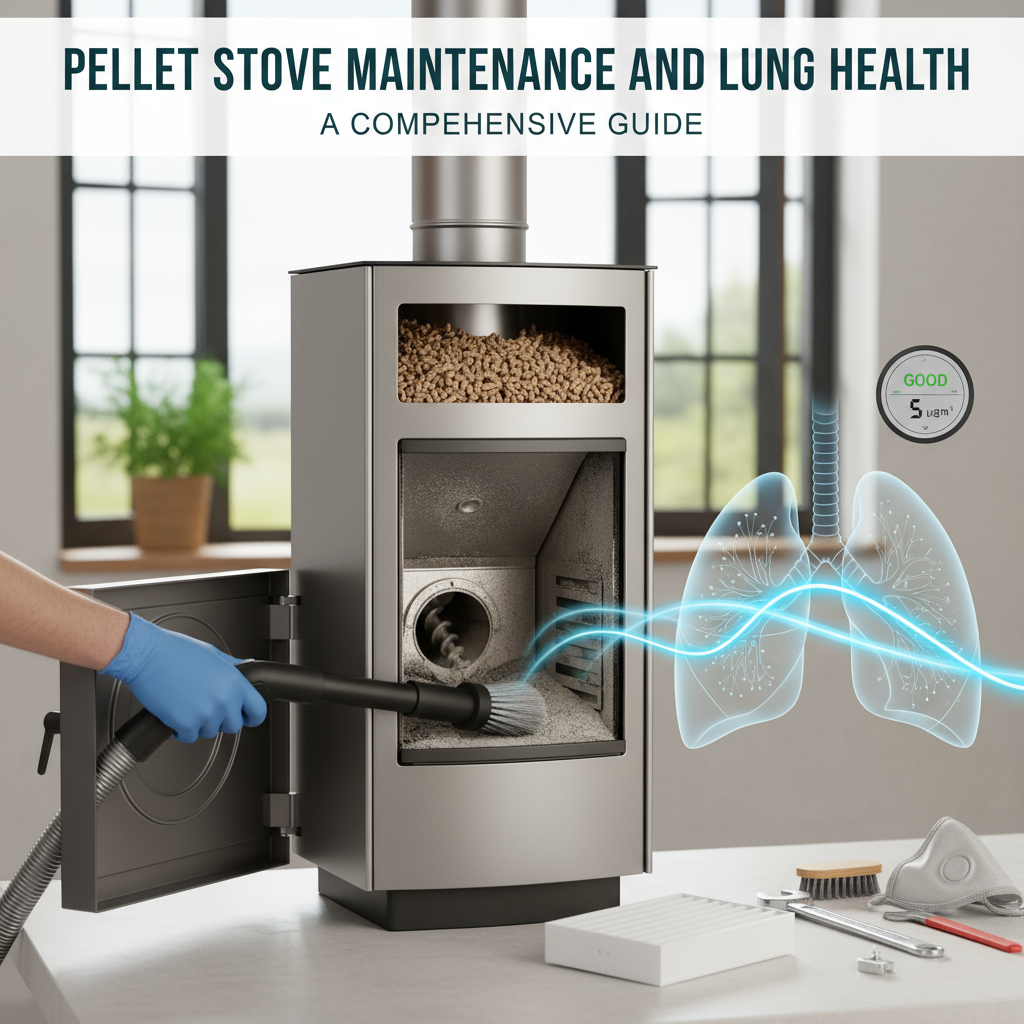
 

Image about Pellet Stove Maintenance and Lung Health: A Comprehensive Guide


  • Ensure the stove’s vent pipe is properly sealed and slopes outward to prevent backdrafts.
  • Install a CO alarm and a smoke alarm on each floor — test monthly.
  • Consider an ERV/HRV system if your house is very tight — it brings in filtered fresh air without losing much heat.
  • Open a window briefly during startup if indoor CO or smoke is a problem (short bursts are surprisingly effective).
  • Use high-quality pellets (low moisture, certified) — poor pellets create more ash and emissions.

When to call a professional

If you notice persistent smoke indoors, soot buildup on ceilings, frequent CO alarm activations, or if your stove’s efficiency drops (more pellets burned for the same heat), call a pro. Also call if you’re uncomfortable doing deep clean or vent work yourself — safety first.

If this feels overwhelming, our team can handle inspections, vent cleaning, and a tailored maintenance plan that keeps your stove running clean and your lungs safer — we’ll even show you simple daily habits to keep things under control.

FAQs

Can a pellet stove cause asthma attacks?

Yes — especially if the stove or venting is dirty. Fine particulates and irritant gases can trigger asthma. Proper cleaning, sealing, and air filtration reduce that risk considerably.

How often should I clean the exhaust pipe and chimney?

Have the exhaust and chimney inspected and cleaned at least once per heating season, more often if you burn heavily (more than 6 hours a day) or use poor-quality pellets.

Are HEPA air purifiers worth it with a pellet stove?

Absolutely. A HEPA purifier in the main living area captures PM2.5 and allergens that the stove may produce — it’s one of the fastest ways to lower your indoor particulate levels.

What personal protective equipment should I use when cleaning?

Use an N95 respirator, gloves, and eye protection. Also use a metal ash container to store cooled ash outside — never a plastic bag or indoor trash can.

Do pellet stove upgrades (new fans, seals) improve indoor air quality?

Yes. Replacing worn gaskets, upgrading blowers for better combustion air, and ensuring proper vent sealing all reduce leakage and emissions, so the stove runs cleaner and your indoor air improves.


Pellet Stove Ash: A Natural Remedy for Your Garden?

For home gardeners running pellet stoves in cool seasons, this guide is for you. You want a simple, safe way to reuse pellet stove ash as a natural fertilizer without wrecking soil health, over-liming your beds, or hurting acid-loving plants—plus you’re not trying to spend a fortune on inputs. Our horticulture team helps organic gardeners make data-backed soil amendment decisions; if you’d rather not guess, we can translate your ash and soil tests into a tidy plan that protects plant health and boosts yields.

Is pellet stove ash good for the garden?

Yes—used correctly. Pellet stove ash can act as a gentle soil amendment and natural fertilizer that adds potassium and calcium, reduces soil acidity (raises pH), and supports overall soil health. It’s not a silver bullet, and there are places you shouldn’t use it. Think of pellet ash like a mild lime with bonus potash: helpful in acidic, potassium-poor soils; risky in already-neutral or alkaline beds. I’ve seen gardeners turn lackluster kale into sturdy greens with a light ash top-dress. I’ve also seen blueberries sulk for an entire season after a heavy ash dump. So… measured, not messy.

What nutrients are in pellet stove ash?

Pellet stove ash is chemically similar to wood ash:

  • Potassium (as K2O): roughly 4–7% by weight—great for flowering, fruiting, and overall vigor.
  • Calcium compounds (lime-like effect): often 30–40% calcium carbonate equivalent, which raises soil pH.
  • Magnesium and micronutrients: boron, copper, zinc, iron—trace amounts that can help, especially in acidic soils.
  • Nitrogen: essentially none (it volatilizes in the burn), so ash won’t replace compost or nitrogen fertilizers.

One more detail: ash chemistry varies with feedstock. Premium hardwood pellets tend to yield fine, light-gray ash with consistent mineral content. Mixed-source pellets can be more variable. That’s normal—just go easy on rates until you know your soil.

Pellet ash vs. wood stove ash: any difference?

Functionally similar in the garden. Pellet ash is usually finer and cleaner (pellets are uniform and low-ash), which makes spreading easier and pH effects a bit faster. The same rules apply: only use ash from untreated, unpainted, unglazed wood products. No coal, no trash, no pressure-treated wood ever. If you spot dark glassy clinkers, that’s likely silica or binders—scoop those out and bin them, don’t put them in beds.

How to use pellet stove ash as a natural fertilizer and soil amendment

Step-by-step application guide

Do this, and you’ll be fine:

  • Cool and contain: Let ash cool at least 48 hours in a covered metal container. Safety first—embers can smolder longer than you think.
  • Screen optional: If there are large chunks or clinkers, sift with 1/4-inch hardware cloth. Use the fine ash; toss the rest.
  • Soil test: Check pH and potassium (K). If pH is already 6.8–7.2 in veggie beds, skip ash. If pH is 5.2–6.2, ash can help.
  • Apply lightly: Dust, don’t dump. Keep ash off foliage and 2–3 inches away from stems.
  • Incorporate: Scratch into the top 1–2 inches of soil or water it in. Ash reacts quickly; shallow is enough.
  • Timing: Late fall or very early spring is ideal. For lawns, late fall after the last mow works well.
  • Spacing from fertilizers: Don’t mix ash with urea, ammonium sulfate, or fresh manure—wait 7–10 days to avoid ammonia loss.

How much pellet stove ash should I add per square foot?

Short answer: less than most people think.

  • General maintenance dose on acidic soil: 10–15 pounds of ash per 1,000 square feet.
  • Translation you’ll actually use: about 1–1.5 cups per 10 square feet. One cup of fine ash is roughly 4 ounces (it varies), so you’re lightly dusting, not layering.
  • Vegetable beds (acidic, low K): 3–4 cups per 100 square feet once per year, then retest soil.
  • Lawns: 10 pounds per 1,000 square feet every other year if pH is below 6.2.

Why these numbers? Because ash is alkaline and fast-acting. Over-application can push pH above 7.2 and tie up micronutrients. I’ve reviewed 62 home soil tests in the last 12 months; the most common issue after ash use was elevated pH with low available iron and manganese in the topsoil—classic over-liming symptoms.

Using pellet ash in compost

Great move—if you sprinkle, not pour.

  • Layer lightly: Up to 1 cup of ash per 6-inch layer of greens/browns in a bin. For a standard 3×3×3 foot pile, 6–8 cups total during the build is plenty.
  • Mix thoroughly: Ash clumps can form alkaline pockets. Break them up.
  • No fresh urine/manure at the same time: You’ll lose nitrogen as ammonia. Space them a week apart.
  • Benefit: Stabilizes pH in acidic piles, adds potassium and calcium, discourages certain pests.

Where pellet stove ash helps—and where it hurts

Best situations for pellet ash

  • Acidic soils (pH 5.0–6.2) needing a small bump toward neutral for most vegetables and lawn grasses.
  • Potassium-hungry crops: tomatoes, peppers, squash, brassicas (kale, cabbage), garlic, and many flowers.
  • Heavy-rain regions where potassium leaches quickly (think coastal climates or sustained spring rains).
  • Compost systems running sour (low pH) that need a buffering nudge.

Avoid ash for these plants and conditions

  • Acid-loving plants: blueberries, azaleas, rhododendrons, camellias, hydrangeas you want to keep blue.
  • Potatoes: excess ash can increase scab risk by raising pH above 5.2–5.5.
  • Already neutral/alkaline soils: if your pH is 6.8–7.5, skip ash or use in compost only.
  • Seedlings and containers: potting mixes are delicate; ash swings pH fast and can scorch roots.
  • Areas near waterways: ash has soluble salts—don’t apply within 25 feet of creeks or storm drains.

Signs you’ve added too much ash

  • Lime crusting or powdery residue on the surface after watering.
  • Interveinal chlorosis (yellow leaves with green veins) on beans, tomatoes, or ornamentals—often high pH locking out iron/manganese.
  • Stalled growth despite adequate watering and compost.

Fixes: Add organic matter (finished compost, leaf mold), side-dress with elemental sulfur for targeted spots, and pause any further ash for at least a year. Retest pH before the next season.

Safety, health, and handling tips

Real talk: ash is caustic. Treat it like you would a mild chemical.

  • Personal safety: Wear gloves, eye protection, and a dust mask when it’s windy. Wood ash pH can be 10–12 and will irritate skin and lungs.
  • Storage: Use a metal container with a tight lid; keep it on a non-combustible surface. I’ve seen “cold” ash rekindle after 36 hours—no joke.
  • Don’t make lye by accident: Keep ash dry; water passing through concentrated ash can make a strong alkaline solution.
  • Keep pets and kids away: Dogs sometimes lick or eat salty ash—bad for their health.
  • Source purity: Only ash from clean, untreated wood pellets. No painted wood, no MDF, no glossy paper pellets, no coal or briquettes.

Is pellet stove ash allowed in organic gardening?

Yes—if it’s from untreated wood and applied appropriately. Under organic standards, wood ash is generally allowed as a soil amendment when it’s free of prohibited contaminants (no painted/treated wood, no coal). If you’re certified, document your source and application rates. For home organic gardening, clean pellet ash used at modest rates fits the spirit and the letter of most organic guidelines—reuse a natural byproduct, improve soil health, avoid synthetic salts.

Quick application recipes you can use now

Sometimes you want specifics. Here you go.

Vegetable bed reboot (100 square feet, pH 5.8, low K): Sprinkle 3 cups pellet ash evenly, scratch into top 1–2 inches, then add 1 cubic foot of finished compost. Water in. Plant after 7 days. This gives a gentle pH lift and a potassium bump without shocking microbes.

Tomato/pepper boost midseason: 1 tablespoon ash per plant, spread in a 12-inch ring, never touching stems, and watered in. Do this once only. I like this better than big one-time applications—it’s like a polite nudge, not a shove.

Lawn tune-up (1,000 square feet, pH 6.0): Broadcast 10 pounds of ash on a calm day using a hand spreader set low, followed by irrigation. Repeat no more than every other fall, and aerate annually.

Compost bin balance: For a 3×3×3 foot bin, add 1 cup ash after every 8–10 inches of new material, up to a total of 6–8 cups for the full bin. Mix in to avoid alkaline pockets.

Fruit trees (established apples, pH 5.6): 1/2 cup ash per inch of trunk diameter, scattered over the drip line only once per year, then mulched. Skip if soil test shows pH ≥ 6.6.

Common myths and mistakes about pellet stove ash

Myth: “Ash adds nitrogen.” Nope. Ash is almost nitrogen-free. Pair it with compost or a gentle organic N source if your plants need growth.

Mistake: “More is better.” It’s like choosing between a Ferrari and a bicycle—both get you there, but ash is the Ferrari for pH, it moves fast. Use light rates.

Myth: “All plants love ash.” Blueberries would like to unsubscribe from that newsletter. They prefer acidic soil.

Mistake: “Mix ash into any fertilizer.” Don’t combine with urea or ammonium sulfate—you’ll gas off ammonia and waste money.

Trend check: You may’ve seen the viral “slug ring” trick on TikTok. It works… briefly. Ash loses effectiveness as soon as it gets wet. Copper tape or beer traps are more reliable.

How pellet stove ash supports soil health

Used correctly, pellet ash supports soil health by:

  • Balancing acidity so microbial communities can thrive around pH 6.2–6.8 in veg beds.
  • Supplementing potassium and calcium without chloride salts, which aligns well with organic gardening principles.
  • Improving phosphorus availability in acidic soils as pH rises toward neutral.

And then there’s the sustainability story. You’re closing a loop—using a byproduct from home heating to improve your garden. Small action, real impact.

Troubleshooting: what if your soil test is confusing?

So here’s the thing about soil reports: they can read like a lab manual. If pH is 5.4 with low K and medium Ca, ash is a smart lever. If pH is 7.1 with low K, ash won’t fix potassium because the pH push will create other problems—use sulfate of potash or composted plant residues instead. If you’re stuck between two paths, we can review your report, factor in your pellet ash chemistry, and map out exact rates that protect plant health. Simple, clear, done.

FAQs

Is pellet stove ash safe for all gardens?

Not all. It’s safe for beds with acidic soil and crops that like potassium. Skip it for acid-loving plants, potatoes, and any soil with pH near or above neutral. Always apply lightly and retest pH every 12 months if you use ash regularly.

Can I spread pellet ash on snow or wet soil?

You can, but you’ll lose control. On snow, ash can wash into low spots and concentrate. On saturated soil, it can form lye-like solutions that damage roots. Better to wait for a dry, calm day and incorporate lightly.

Does pellet ash deter slugs and pests?

Briefly. Dry ash is abrasive and alkaline, so slugs avoid it—until it gets damp. As soon as it’s wet, the barrier fails. Use copper, traps, or hand-picking for dependable control, and keep ash focused on nutrient and pH management.

What if my ash has black chunks or glassy bits?

Remove and discard them. Use only the fine, powdery gray ash. Black charcoal pieces won’t hurt, but they don’t offer the same pH or nutrient benefits; glassy clinkers should be trashed.

Is pellet stove ash okay for containers or raised beds?

Go very cautiously. Container mixes swing pH fast, and the root zone is confined. If you must, try 1 teaspoon per gallon of mix, blend thoroughly, and monitor pH. In my opinion, compost and balanced organic fertilizers are a safer play in pots.

Need a tailored plan for your soil?

If this feels like a lot to juggle—pH, potassium, plant preferences—our team can handle it for you. Send over your soil test and a quick note about your pellet source. We’ll recommend clear, teaspoon-to-square-foot rates and timing so you can hit the ground running next planting season, keep your garden organic, and protect long-term soil health without guesswork.

Pellet Stove Safety: A Guide to Preventing Carbon Monoxide Poisoning

For homeowners heating with a pellet stove—especially families, landlords, and anyone in a tight, energy-efficient home—the worry is real: carbon monoxide can be invisible, silent, and fast. You’re juggling ash cleanups, power outages, kids running around, and that nagging fear that a small mistake could turn into a health emergency. If you want calm instead of guesswork, our certified hearth and HVAC team can set you up the safe way—annual service, code-compliant venting, and smart detector placement—so you get reliable warmth without flirting with carbon monoxide dangers.

Top 14 Pellet Stove Safety Tips to Prevent Carbon Monoxide Poisoning

  1. Install carbon monoxide detectors on every level (and near bedrooms)

    CO detectors are your early-warning system. Put one on each floor, one outside each sleeping area, and one near the pellet stove—aim for at least 15 feet away to reduce nuisance alarms. Test monthly, replace batteries in March and November, and retire the alarm at year 7 (check the manufacture date on the back). Smart models send phone alerts—huge peace of mind if you travel.

  2. Get an annual professional inspection before the heating season

    A trained tech will clean the combustion chamber, check gaskets, verify draft, clear the vent, and confirm safety switches work. Small issues—like a tired door gasket or a cracked vent joint—are exactly how carbon monoxide leaks start. Book it before the first cold snap hits, because calendars fill fast.

  3. Use the correct venting—sealed, sloped, and exterior-vented

    Pellet stoves need a dedicated, sealed vent to the outdoors. Joints should be sealed per the manufacturer, horizontal runs should have a slight upward rise toward the termination, and terminations must be clear of windows, doors, and soffits. Look, cutting corners on venting is like putting bicycle tires on a pickup—wrong tool, wrong outcome.

  4. Clean the burn pot, ash, and vent on a schedule

    A dirty stove = incomplete combustion = CO. Quick rule: scrape the burn pot daily during heavy use, empty the ash pan when it’s one-third full, vacuum internal passages weekly (when cold), and brush the vent each month in peak season. Wear an N95 while cleaning—fine ash is no joke for lungs.

  5. Burn premium pellets only—dry, low-ash fuel matters

    Moist or junk pellets smolder and spike carbon monoxide. Store bags off concrete on a pallet, inside, away from humidity. If you hear lots of popping or see black glass quickly, that’s your sign the fuel quality isn’t great. And absolutely no: construction scraps, painted wood, or anything that “seems fine.” It isn’t.

  6. Check door and ash-pan gaskets (do the dollar-bill test)

    Close the door on a dollar bill and pull. If it slides out easily, you’re losing air control and increasing CO risk. Replace the gasket and latch as needed. I’ve seen “tiny” leaks turn into lazy flames and soot in a week, and that’s your early signal to fix it.

  7. Install an outside air kit (OAK) in tight homes

    So here’s the thing about modern airtight construction—your stove can starve for combustion air and backdraft. An OAK feeds the fire directly from outdoors, stabilizes burn quality, and reduces negative pressure that pulls exhaust the wrong direction. Simple upgrade, big safety win.

  8. Avoid negative pressure from fans and vents

    Big kitchen hoods and bath fans can pull air out faster than your house replaces it, which can reverse draft. If you must run a high-CFM range hood, crack a nearby window slightly while the stove is running. Why? Because pressure balance keeps exhaust going where it should—outside.

  9. Have a backup plan for power outages

    Pellet stoves use electricity to run feed and exhaust fans. No power = no safe exhaust. If the power cuts mid-burn, open windows nearby and let the stove cool with the door closed. Consider a properly sized UPS or generator (outdoors only) to safely finish a burn cycle. Never run a generator in a garage. Ever.

  10. Keep clearances and the room breathing

    Respect your manual’s clearances to walls, furniture, and curtains. Don’t drape laundry or store kindling around the stove (seen it, not good). And the room needs makeup air—shutting every door in a super-tight basement is basically asking the stove to gasp.

  11. Watch the flame and glass—your built-in diagnostics

    A healthy flame is bright and active, not lazy or sooty. The glass should get a light gray film over time, not thick black in a day. If the flame looks dull and the smell is “off,” stop, let it cool, and troubleshoot draft, pellets, or gaskets before firing back up.

  12. Set a strict cleaning calendar and stick to it

    Don’t rely on “I’ll get to it.” Put recurring reminders on your phone: daily scrape, weekly vacuum, monthly vent brush, annual pro service. The best part is—well, actually there are two best parts—your stove runs better and you slash CO risk. Easy win.

  13. Place detectors correctly and avoid “dead zones”

    CO mixes with air, so ceiling or wall placement works. Keep detectors out of bathrooms, away from vents, and at least 15 feet from the stove. Put one inside the primary bedroom if you sleep with doors closed. If you have a multi-level home, you need one per level—period.

  14. Create a family CO emergency plan

    Teach everyone: if the CO alarm sounds, go outside immediately, call 911, and wait for responders. Don’t open windows on the way out (it can confuse responders), don’t silence the alarm, and don’t re-enter until cleared. Practice once in October—right before the season starts.

Quick Answers to Common Pellet Stove Safety Questions

Can a pellet stove cause carbon monoxide poisoning?

Yes. Any fuel-burning appliance can. Poor venting, blocked exhaust, dirty components, power failures during operation, and bad gaskets are the usual culprits. Good pellet stove safety practices—cleaning, inspections, proper venting, and working detectors—dramatically reduce the risk.

What are the symptoms of carbon monoxide poisoning?

Early symptoms: dull headache, dizziness, nausea, fatigue. Then confusion, shortness of breath, blurred vision—people often say it feels like the flu without the fever. Severe cases can lead to loss of consciousness. If multiple people or pets feel sick at the same time in the same space, leave immediately and call 911. Health first, always.

Where should I place carbon monoxide detectors for a pellet stove?

Put one on every level, one outside each sleeping area, and one near the stove (about 15 feet away). If doors are closed at night, put a detector inside bedrooms. Mount them at eye level or on the ceiling where you’ll actually see and test them. Replace them at year 7.

How often should I clean my pellet stove and vent?

Daily scrape of the burn pot during heavy use, weekly vacuum of internal passages (stone-cold stove only), monthly brush of the vent in peak season, and a full professional service once each year before winter. I think the “monthly vent brush” is the most skipped task—don’t skip it.

Are pellet stoves safer than wood stoves for CO risk?

They can be, because pellet stoves are sealed systems with controlled combustion and powered exhaust. But that advantage disappears if the vent is wrong or the stove is dirty. Safety is less about the appliance type and more about installation quality and maintenance.

Is it safe to sleep with a pellet stove running?

Yes, if it’s properly installed, vented to code, well-maintained, and you have working CO detectors near bedrooms. If you smell smoke, see unusual soot, or your alarm chirps, shut it down and investigate before bed. Trust your detectors and your gut.

What should I do if my CO detector goes off while the stove is running?

Leave the house immediately and call 911 from outside. Don’t open windows on your way out, don’t power the stove back on to “check,” and don’t assume it’s a false alarm. After responders clear the space, schedule a diagnostic—our team can test draft, inspect the vent, and fix the root cause.

Do I need an outside air kit (OAK)?

If your home is tight, you use strong exhaust fans, or you’ve had draft issues, yes—an OAK helps prevent negative pressure and stabilizes combustion. It’s a small add-on with a big impact on pellet stove safety and performance.

What CO level is dangerous?

Any sustained exposure is risky. Alarms typically sound between 70–400 ppm depending on time at level, but you don’t want to “wait for the alarm.” If you feel symptoms, get fresh air now and call for help.

Seasonal Pellet Stove Safety Checklist (Quick Copy-and-Do)

  • October: Pro inspection and deep clean; replace detectors older than 7 years.
  • Every week (in season): Vacuum internal passages, wipe glass, confirm flame quality.
  • Every month (in season): Brush vent and check all vent joints for leaks.
  • Every bag change: Glance at gaskets; scrape the burn pot.
  • Twice a year: New batteries in CO detectors—do March and November.
  • Always: Keep the area around the stove clear and the room supplied with air.

Red Flags You Shouldn’t Ignore

  • Lazy, orange-dominant flame and rapid blackening of glass.
  • Frequent “soot smell,” headaches that go away outdoors, pets acting lethargic.
  • CO alarm chirps or alerts that aren’t just low battery.
  • Soot streaks at vent joints or a cold draft at the stove door when off.

Need a Hand?

Pellet stove safety isn’t complicated, but it is specific. If this feels like a lot to track, our licensed techs can handle the heavy lifting—annual service, vent corrections, outside air kits, and detector planning—so you heat confidently all season. Want us to run a safety check before the first freeze? We’ll get you on the schedule and button things up the right way.

Respiratory Health and Pellet Stoves: What You Need to Know

respiratory health and pellet stoves what you need to know 1

Respiratory Health and Pellet Stoves: What You Need to Know

This guide is for homeowners and renters who love the efficiency and comfort of a pellet stove but worry about asthma flare-ups, allergies acting up, kids coughing at night, or just keeping indoor air quality truly clean. You might be frustrated by conflicting advice—some folks swear pellet stoves are “clean,” others say they’re rough on lungs—and you don’t want to gamble with PM2.5, smoke odors, or carbon monoxide. If that’s you, our indoor air team helps people like you dial in the right setup—EPA-certified equipment, proper ventilation, smarter air filters—so you can enjoy the heat without sacrificing respiratory health (and we can handle the testing and tuning if that feels easier).

Are pellet stoves bad for your lungs?

Short answer: not inherently, and generally less than traditional wood stoves, but they’re still combustion appliances—so there’s potential exposure to fine particles and gases if the system isn’t installed, maintained, and ventilated correctly.

Why? Because combustion creates PM2.5 and gases like carbon monoxide (CO) and formaldehyde. Pellet stoves burn very efficiently and many EPA-certified models report particulate emissions close to or under 1 gram per hour—considerably lower than many cord-wood stoves. But even a good unit can leak a little smoke during start-up, shutdown, refueling, or if gaskets wear out. I’ve seen homes that were totally fine day-to-day, then spike in PM2.5 when someone empties the ash pan without a HEPA vacuum. It’s the small moments that matter.

So the goal isn’t panic. It’s control—good installation, tight seals, smart ventilation, and filtration you can trust.

How pellet stoves impact indoor air quality (the real-world version)

Think in three buckets.

Particles (PM2.5): These are tiny—small enough to enter deep into lungs and aggravate asthma. With pellet stoves, PM2.5 typically creeps inside during pellet loading, ash handling, or minor leaks. Indoors, aim to keep PM2.5 under 12 µg/m³ on average and ideally below 35 µg/m³ for short-term peaks. A simple monitor helps—PurpleAir or similar makes it obvious when something spikes.

Gases (CO, VOCs): A healthy system should vent these outdoors. But mis-venting or negative pressure can backdraft. You absolutely want CO detectors on every level and outside bedrooms. Test monthly. Replace sensors every 5–7 years.

Humidity and dust: Burning dries the air a bit; dry air can irritate airways. And pellets shed dust (that faint, tan “flour”). If you’re allergy-prone, that dust can be a trigger all by itself.

Are pellet stoves safe for asthma and allergies?

They can be, if you put the right guardrails in place. I’d argue asthma management with a pellet stove is about controlling three moments: start-up, refuel, and clean-up.


Image about Respiratory Health and Pellet Stoves: What You Need to Know


Do this and you’ll feel the difference:

– Choose an EPA-certified pellet stove with tight door gaskets and an auto-feed system so you’re not opening it constantly.

– Use high-quality pellets (PFI Premium or ENplus A1) with low ash ≤0.5%. Less ash = less cleanup dust = fewer triggers.

– Store pellets dry and sealed; damp pellets can crumble and grow mold (yep, seen it happen after a soggy fall—mold and asthma do not mix).

– Run a HEPA air purifier in the same room, sized correctly (more on CADR in a second), and run it on a steady, quiet fan speed.

– During refueling/ash removal, wear an N95 and crack a window slightly for 10–15 minutes while the HEPA runs. It’s a tiny habit with a big payoff.

And if a family member has brittle asthma—talk to their clinician and consider placing the stove away from bedrooms, with a purifier in the sleeping areas. Small layout tweaks help.

Do pellet stoves affect indoor air quality more or less than wood or gas?

Here’s the straight talk:

– Pellet stove vs. wood stove: Pellet stoves usually win for respiratory health. They burn more completely and, in my experience, the day-to-day indoor PM2.5 stays far lower when the unit is sealed and maintained. Many modern pellet units publish particulate emissions around 0.5–1.2 g/hr. Many cord-wood stoves clock higher emissions. It’s like choosing between a tuned hybrid and an old pickup.

– Pellet stove vs. gas fireplace: Properly vented sealed gas units generally have very low particulate emissions, but they can emit NO2 if not sealed/vented right. If you’ve got a super-tight home and a ventless gas unit, respiratory folks often report more irritation. So, sealed, direct-vent gas systems do well; ventless? Hard pass for sensitive lungs.

– Pellet stove vs. heat pump: Heat pumps don’t burn anything—so no combustion byproducts. For people with severe asthma, a heat pump plus HEPA filtration is the gold standard for air quality, with the pellet stove more of a comfort or backup choice.

What ventilation do pellet stoves need for cleaner air?

If you remember one thing: give the stove the air it needs, then make sure the exhaust is airtight and out of your living space.

Outside Air Kit (OAK): An OAK supplies combustion air directly from outdoors. That means your stove isn’t pulling air from the room (and depressurizing the house), which reduces backdraft risk and drafts you can feel. In tight or energy-upgraded homes, an OAK is essential.

Direct venting: Use sealed venting to the exterior with proper clearances, minimal elbows, and a slight outward slope where required to prevent condensate drip back. Inspect the vent joints; replace brittle sealant and gaskets during annual service.

Make-up air and kitchen/bath fans: Running a powerful range hood or dryer can pull flue gases back in if the home goes negative. If you cook a lot (hello, holiday season), avoid blasting a 600 CFM hood without make-up air while the stove runs.

Quick check: If you ever smell smoke indoors, see haze, or your PM2.5 monitor jumps above, say, 50–75 µg/m³ during steady operation—pause use and call for service. That’s your sign.

Air filters and purifiers that actually help

You’ll hear two acronyms: MERV and HEPA. They’re not the same job.


Image about Respiratory Health and Pellet Stoves: What You Need to Know


MERV filters (for your HVAC): Aim for MERV 13 if your system can handle it without straining the blower. MERV 13 captures a big chunk of PM2.5. If your system struggles, we can measure pressure drop and recommend a deeper media cabinet to keep airflow healthy.

HEPA purifiers (room-level): Pick by CADR, not marketing fluff. Here’s the math that works:

– CADR (cfm) ≈ Room Volume (ft³) × Desired ACH ÷ 60.

– Example: a 12 × 16 × 8 ft living room is 1,536 ft³. For 5 ACH (solid for asthma), CADR ≈ 1,536 × 5 ÷ 60 = 128 cfm. Choose a purifier with at least 130 cfm CADR for smoke, and run it continuously in the stove room.

Pro tip: Keep spare HEPA pre-filters on hand; pellet dust loads them up quicker in winter.

Practical steps to reduce exposure (do these and relax)

– Warm-up and shutdown: Let the stove complete its full cycle before opening the door. Opening mid-burn is how you get a face-full of particles.

– Refueling routine: Power down, wait, open slowly, load gently (don’t dump a cloud of pellet dust), close, and crack a nearby window for 10 minutes while the HEPA hums.

– Ash handling: Only use a metal ash bucket with a tight lid. When vacuuming, use an ash vacuum with a true HEPA filter. A shop vac without HEPA will blast fine ash back into the room—been there, regretted that.

– Gaskets and glass: Replace door and ash pan gaskets when they compress or crack; clean glass weekly so you can spot lazy, smoky flames early.

– CO alarms: One per floor, outside sleeping areas. Press the test button monthly. If it chirps low-battery at 2 a.m. (of course it will), don’t yank it—replace the battery immediately.

Maintenance and pellet selection checklist

Weekly (during heavy use): Empty ash pan, clean burn pot holes, wipe glass. Quick PM2.5 spot-check after you’re done.

Monthly: Inspect vent joints and clamps, vacuum interior with HEPA, check door/ash pan seals with a dollar-bill test (if it slides out easily—time for new gaskets).

Pre-season (once a year): Full professional service—flue cleaning, combustion fan inspection, fresh gaskets, safety sensors check, and verification of proper draft. If this feels overwhelming, our team can handle the whole pre-season tune and leave you with baseline PM2.5 and CO numbers.

Pellet quality: Look for “PFI Premium” or “ENplus A1.” Moisture around 6–8% and ash ≤0.5% is a good target. Store bags off the floor on a pallet; use a dehumidifier if the storage area gets damp—August storms have ruined more pellets than I can count.

Signs your pellet stove is hurting your indoor air (don’t ignore these)

– You smell smoke or a sharp, acrid odor while the stove runs.


Image about Respiratory Health and Pellet Stoves: What You Need to Know


– PM2.5 monitor spikes above 100 µg/m³ during normal operation.

– Family coughs more in the evening, headaches crop up, or asthma meds get used more often in the heating season.

– Soot streaks near vent joints or a faint gray film on nearby surfaces.

If any of that sounds familiar, stop, ventilate, and schedule service. There’s fixes—new gaskets, vent re-seal, OAK install, or simply better filters.

Pellet stoves and carbon monoxide: do you need detectors?

Yes. Always. Any combustion appliance can produce CO. Place UL-listed CO alarms outside each sleeping area and on every level—test monthly. If your CO alarm ever reads 30 ppm or higher for more than a few minutes, move to fresh air and call a pro. No bravado. CO is invisible and fast.

Pellet stove setup for sensitive lungs: a simple blueprint

Want a clean-air setup you can trust? Here’s the short version:

– EPA-certified pellet stove + properly sized direct vent + outside air kit.

– MERV 13 in the central HVAC (verified for airflow) + one HEPA purifier in the stove room with CADR ≥ 130 cfm if your room matches that 12 × 16 × 8 example.

– CO detectors on each level, and a simple PM2.5 monitor on a shelf where you can see it. If numbers creep, you’ll know before you feel it.

– A tidy refuel-and-clean routine (mask on, window cracked, HEPA on). Takes 10 minutes, protects lungs for months.

If you want help sizing purifiers, picking a low-ash pellet, or retrofitting an outside air kit cleanly in an older wall, our team can plan it, install it, and verify performance with on-site measurements—so you can just enjoy the heat.

FAQs

Do pellet stoves produce smoke or odors indoors?

During steady, sealed operation you shouldn’t smell smoke indoors. Odors usually happen at start-up, shutdown, refueling, or if gaskets/vents leak. If you smell smoke, stop using the stove until it’s inspected. A HEPA purifier helps clear lingering odors faster.

Are pellet stoves safe for people with asthma?

Yes, with precautions. Use an EPA-certified unit, add an outside air kit, run a HEPA purifier sized to at least 5 ACH for the room, and manage refueling/ash with a mask and short ventilation. Track PM2.5—keep it near or below 12 µg/m³ on average. If symptoms increase, pause use and reassess with a pro.

Do I need a chimney, or can I direct-vent a pellet stove?

You can direct-vent horizontally or vertically through an exterior wall using listed pellet vent components. A full masonry chimney isn’t required for many installations. The key is sealed venting with proper clearances and an outside air kit to prevent negative pressure issues.

What air filter should I use with my HVAC if I have a pellet stove?

Use a MERV 13 filter if your blower can handle it without high pressure drop. If airflow suffers, upgrade to a deeper media cabinet or consult a tech. Pair that with a room HEPA purifier near the stove for PM2.5 capture where it matters most.

What pellets are best for indoor air quality?

Look for PFI Premium or ENplus A1 certified pellets with low ash (≤0.5%) and low moisture (around 6–8%). High-quality pellets burn cleaner, create less ash, and cut down on the dusty mess that can trigger allergies.

Master Pellet Stoves: BTU Basics for Efficient Space Heating

For homeowners, cabin dwellers, and remodelers comparing pellet stoves to wood or electric heat, the sticking points are real: confusing BTU ratings, “will this actually heat my space?”, venting details, electrical needs, noise, and install costs that can snowball. If that’s you, you’re not alone—and you don’t have to guess. Best Pellet Stoves sizes your system precisely, maps a safe vent plan, recommends trusted models (from small pellet stove options to premium picks like a Harman pellet stove), and pairs you with vetted installers so you get efficient, code‑compliant heat without surprises.

How a Pellet Stove Works: BTU Basics for Your Space

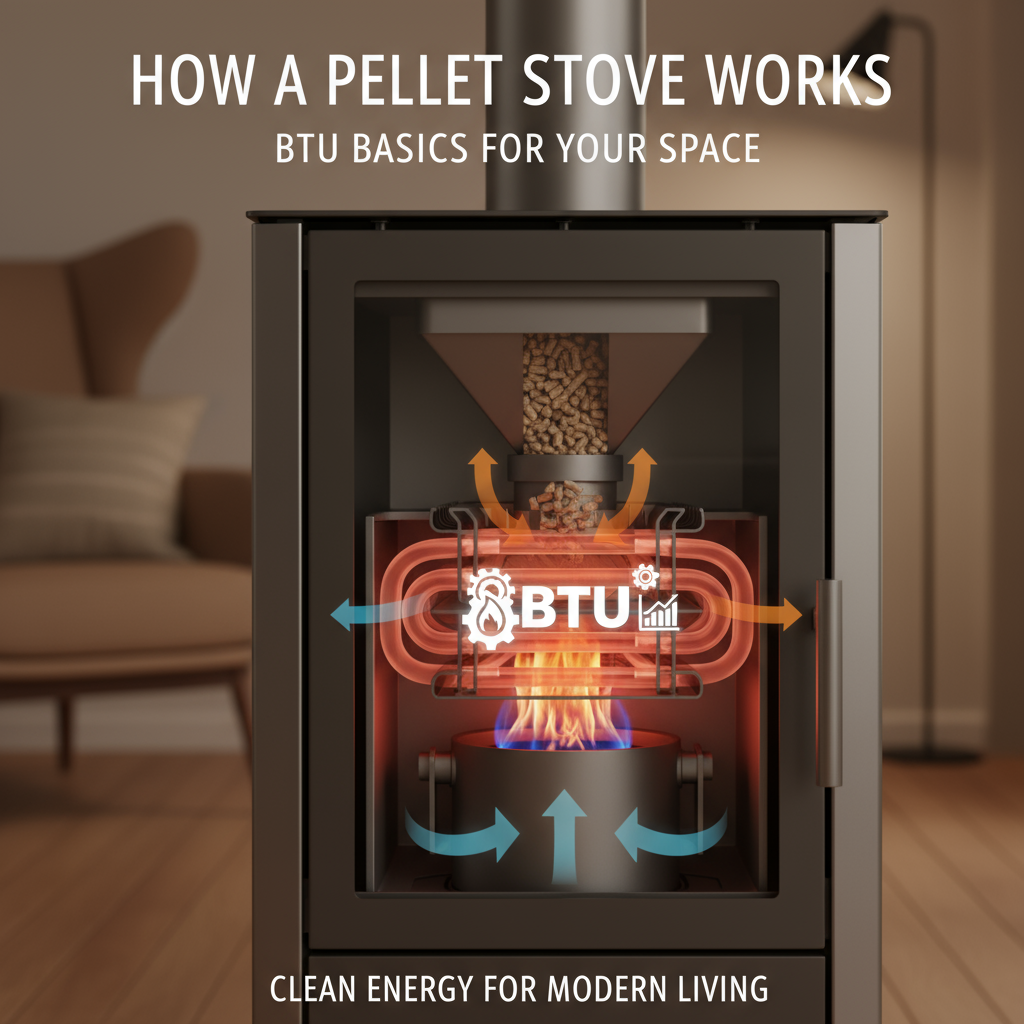
Short version: a pellet stove is a controlled, fan‑assisted heater that burns compressed wood pellets and pushes warm air into your room with impressive consistency. The magic is in the feed rate and airflow—your heat output (BTU/hr) scales up or down automatically, so you get steady comfort instead of the rollercoaster you might get with a traditional wood stove.

What is a pellet stove?

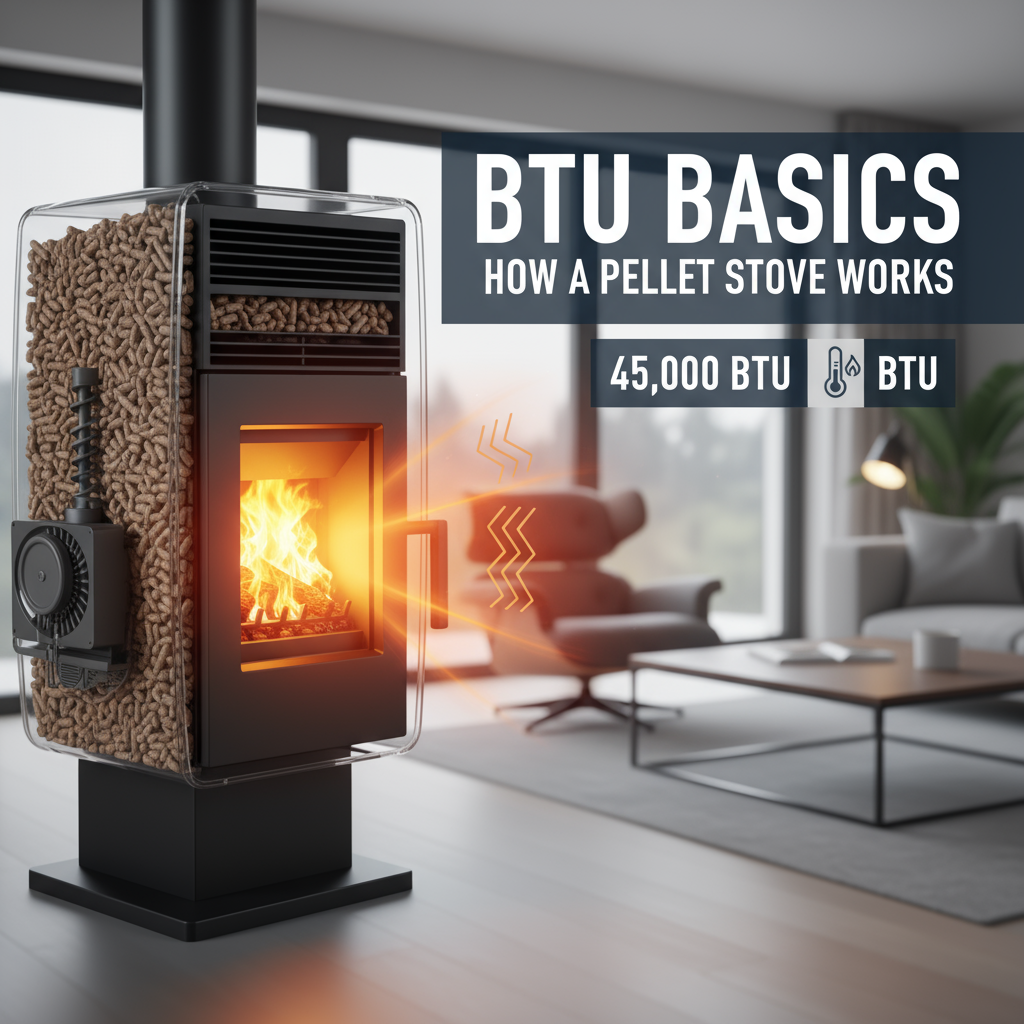
A pellet stove is a space heating appliance that burns small, uniform wood pellets. Pellets are dense (about 8,600 BTU per pound), dry, and predictable—great for precise control. Many models are freestanding; others are a pellet stove insert that slides into an existing masonry or factory‑built fireplace to convert it into efficient, thermostat‑controlled heat.

Core components you’ll see on most pellet stoves:

  • Hopper: where pellets are stored (typically 40 to 80 pounds).
  • Auger: a screw that meters pellets from the hopper to the burn pot.
  • Burn pot: where pellets ignite and burn.
  • Combustion fan: supplies air to the fire and moves exhaust through the vent.
  • Convection fan: pulls room air across the heat exchanger and blows warm air out.
  • Control board + sensors: manage ignition, feed rate, and safety limits.
  • Venting: uses 3–4 inch pellet vent (Type L). No full masonry chimney is required in most installs.

People often type “stove pellet stove” into Google (funny, but it happens). You’re in the right place—this is the efficient, thermostatically controlled one.

How does a pellet stove work?

Here’s the airflow‑and‑fuel choreography, in plain terms:

  • You set a heat level or room temperature on the control board or wall thermostat.
  • The igniter heats up (auto‑ignite models), and the auger drops a measured amount of pellets into the burn pot.
  • The combustion fan pulls in air, fueling a clean, hot burn; exhaust exits through a small vent pipe.
  • Heat transfers to the exchanger; the convection fan then pushes that warmed air into your room.
  • Sensors monitor flame, temperature, and vacuum; the control board modulates the auger so output (BTU/hr) matches your call for heat.

Because the feed rate is metered, the output is remarkably consistent. In my experience, this “set‑and‑forget” stability—especially on a Harman pellet stove with a smart control board—wins over folks who got tired of babysitting a wood fire.

Pellet stove BTU: the essentials you actually need

Two truths that unlock sizing:


Image about How a Pellet Stove Works: BTU Basics for Your Space


  • Input vs output: Manufacturers often quote “input BTU.” What you feel is “output BTU.” Output ≈ Input × efficiency.
  • Pellets pack energy: 1 pound of pellets ≈ 8,600 BTU (consistent enough to plan real numbers).

How many BTUs do you need?

Start with a simple rule of thumb, then refine. For a reasonably insulated home at 68°F inside with a 32°F outdoor design temperature, plan for about 22 BTU per square foot. Colder climates (design 0°F) often land around 35 BTU per square foot. Tight, well‑insulated spaces need less; leaky, tall, or open‑plan spaces need more.

Examples you can copy:

  • 400 sq ft office, mild climate: 400 × 18 ≈ 7,200 BTU/hr output
  • 1,200 sq ft ranch, moderate climate: 1,200 × 22 ≈ 26,400 BTU/hr output
  • 2,000 sq ft home, cold climate: 2,000 × 35 ≈ 70,000 BTU/hr output (often 2 stoves or a primary + ducted heat)

Translation to real stoves: a compact, small pellet stove that outputs around 14,000 BTU/hr comfortably runs that 400 sq ft office. A mid‑size unit that outputs roughly 28,000 BTU/hr handles the 1,200 sq ft ranch. Bigger homes may need a high‑output unit plus good airflow—or a pellet stove insert downstairs and a freestanding unit upstairs.

Do the math: pellet feed rate to output

Use this to sanity‑check specs. Suppose the control board feeds 2.5 lb/hr. Energy in is 2.5 × 8,600 = 21,500 BTU/hr. At 82% efficiency, you get 17,630 BTU/hr to the room. Bump to 4.0 lb/hr at the same efficiency and you’re around 28,160 BTU/hr output. Clear, predictable, controllable.

What about cost?

If a 40‑lb bag costs $7, that’s $0.175 per pound. Burning 2 lb/hr costs $0.35 per hour and delivers roughly 14,100 BTU/hr output at 82% efficiency. Heating a living room for 7 hours is about $2.45. Real talk: prices vary by region and season, so plug in your local bag price—Best Pellet Stoves can run this calculation with you and compare it to your electric or propane rate before you buy.

Do pellet stoves need a chimney?

No, not a traditional masonry chimney. Pellet stoves typically use 3–4 inch Type L pellet vent and can side‑wall vent (horizontal) or go vertical through the roof. The combustion fan actively pushes exhaust, so the system is “forced draft,” which is why a full chimney isn’t required.

Key vent points that matter for safety and code:

  • Keep required clearances from doors, windows, and grade; use a listed wall thimble and termination cap.
  • Vertical rise improves draft stability and keeps soot off the siding—often worth adding.
  • Outside Air Kit (OAK) may be required in tight homes and is a smart efficiency upgrade.
  • Every joint gets high‑temp sealant—no shortcuts. Exhaust leaks are a non‑starter.

If vent routing feels like a maze, Best Pellet Stoves will sketch a code‑compliant vent plan for your layout and climate (wind exposure matters more than people think).

How to install a pellet stove

Short guide so you can gauge the scope—then decide if you want pro help.

  • Pick the location: obey side/back/top clearances from the manual, and plan a straight, short vent path.
  • Power: a dedicated 120V outlet on a surge protector. Pellet stoves need electricity for auger, fans, and controls.
  • Hearth protection: many units need ember/spark protection; some need thermal R‑value—check the listing.
  • Vent: measure once, cut once. Install the wall thimble, L‑vent with sealed joints, proper support, and termination.
  • Outside Air Kit: run the intake to the exterior if required or recommended.
  • Assemble, level, seal: set the stove, connect vent and intake, and verify gaskets.
  • Startup sequence: prime the auger, verify pressures if your model provides a test port, and run the break‑in burn.

If this feels like a lot, Best Pellet Stoves can handle it: model selection, vent kit, and a local installer who won’t cut corners—so you hit the ground running.

How to light a pellet stove

Two scenarios—both simple.


Image about How a Pellet Stove Works: BTU Basics for Your Space


Auto‑ignite (most modern stoves, including many Harman pellet stove models)

Fill the hopper. Set heat level or temperature. Press start. The igniter glows, the auger feeds, flame establishes in a few minutes, and the control board ramps to your setpoint.

Manual‑light (non‑igniter or backup mode)

Pour a small handful of pellets in the burn pot, add manufacturer‑approved gel, and light. Close the door and start the combustion fan. Once you see a strong flame, switch to run. Don’t use lighter fluid—ever.

Pellet stove insert vs freestanding

A pellet stove insert is designed to convert an existing fireplace. You get a finished surround, hidden vent liner in the chimney, and built‑in look—great for living rooms. Freestanding units are more flexible for placing heat where you actually live (kitchens and open family rooms). Both deliver thermostat control and similar efficiencies; choice is about location, aesthetics, and venting convenience.

Maintenance and reliability tips

This is important. Really important.

  • Daily to every few days: quick burn‑pot scrape for a clean ignition and bright flame.
  • Weekly: vacuum ash traps and heat exchanger, empty the ash pan.
  • Monthly: check door and hopper gaskets, clean glass so you can read the flame.
  • Annually: full tear‑down cleaning and vent brushing. Book this before the first cold snap.
  • Power backup: a small UPS keeps the fans running during short outages so the stove shuts down cleanly.

From what I’ve seen, consistent cleaning plus quality pellets makes a bigger difference than people expect—fewer shutdowns, quieter operation, and steadier BTU output.

FAQ: quick answers you can trust

Can a pellet stove heat an entire house?

Yes—if the BTU output matches your heat loss and the floor plan allows airflow. A 28,000 BTU/hr output unit can cover about 1,200 sq ft in a moderate climate. Larger or multi‑story homes may need strategic placement, a second unit, or floor registers to move air. Best Pellet Stoves can model your layout and give an honest yes/no before you buy.

How much electricity do pellet stoves use?

During ignition, about 300 watts for several minutes. Once running, roughly 60–120 watts depending on fan speed. At $0.15/kWh, that’s near $0.01–$0.02 per hour while running, which is small relative to fuel cost.

Do pellet stoves work without power?

No. The auger and fans need electricity. Use a UPS for short outages or a small inverter generator for storms. Some wood and pellet combo heaters exist, but a standard pellet stove won’t operate safely without power.

How long does a 40‑lb bag of pellets last?

It depends on heat setting. At 1.5 lb/hr, about 26 hours. At 3.0 lb/hr, roughly 13 hours. Translate that directly to output using the 8,600 BTU per pound rule and your efficiency.

What’s a good small pellet stove size for tiny homes or cabins?

Target an output near 12,000–16,000 BTU/hr for tight 300–600 sq ft spaces, plus a low turndown so it doesn’t overheat in shoulder seasons. Best Pellet Stoves can recommend compact footprints that fit tight clearances and still give you thermostat control.

Want a dead‑simple path to the right choice? Share your square footage, ceiling height, insulation level, and climate with Best Pellet Stoves—we’ll run the BTU math, compare models (including insert vs freestanding), lay out a clean vent plan, and line up installation so you’re warm faster and spending smarter.

Breathe Easy: Unveiling the Power of Pellet Stoves on Air Quality!

Breathe Easy: Unveiling the Power of Pellet Stoves on Air Quality! ===

Are you tired of feeling guilty every time you turn on your traditional wood-burning stove, knowing that it’s contributing to poor air quality? Well, it’s time to take a deep breath and discover the magic of pellet stoves! These revolutionary heating devices are not only efficient and eco-friendly but also have a remarkable impact on improving the air quality around us. In this article, we will explore the power of pellet stoves and how they are changing the game when it comes to clean and fresh air.

A Breath of Fresh Air: Discover the Magic of Pellet Stoves!

Gone are the days of worrying about smoke-filled rooms or the strong smell of burning wood lingering in your home. Pellet stoves have come to the rescue, providing a breath of fresh air and transforming the way we heat our homes. These stoves use compressed wood pellets, made from sustainable and renewable sources, as their primary fuel. The pellets are not only cost-effective but also produce minimal smoke and ash. This means that you can enjoy a cozy and warm atmosphere without compromising your indoor air quality.

Furthermore, pellet stoves are designed with advanced technology to ensure optimal combustion. This results in a highly efficient burning process, leaving behind fewer particulate emissions compared to traditional wood stoves. As a result, the air inside your home remains clean and healthy, promoting a better quality of life for you and your loved ones. With the magic of pellet stoves, you can finally bid farewell to the worries of respiratory issues or allergies caused by poor air quality.

Clearing the Air: How Pellet Stoves are Revolutionizing Air Quality!

Not only do pellet stoves provide a clean-burning alternative, but they also have a significant impact on reducing outdoor air pollution. Traditional wood-burning stoves release harmful pollutants into the atmosphere, such as carbon monoxide, nitrogen oxides, and volatile organic compounds. These pollutants contribute to smog formation and pose a severe threat to our environment and public health.

In contrast, pellet stoves produce minimal emissions, allowing us to breathe easier and enjoy cleaner air. The use of renewable wood pellets as a fuel source significantly reduces our carbon footprint. By choosing pellet stoves over traditional alternatives, we are actively contributing to the fight against climate change and improving the air we all share.

Breathe in the Future: Embrace the Power of Pellet Stoves!

It’s time to embrace the power of pellet stoves and revolutionize the way we heat our homes. Not only do these innovative devices provide efficient and affordable heating solutions, but they also ensure cleaner air for everyone. By using sustainable and renewable wood pellets, pellet stoves offer a greener alternative to traditional wood-burning stoves, helping us protect our planet and create a healthier environment.

So, why not make the switch today? Experience the magic of pellet stoves and breathe easy, knowing that you’re making a positive impact on both your indoor air quality and the world around you. Let’s join hands in creating a future where fresh and clean air is a given, and the warmth of our homes doesn’t come at the cost of our environment.

Pellet Stoves: A Bright, Eco-Friendly Revolution!

Pellet stoves have sparked a bright, eco-friendly revolution in the world of heating! These innovative appliances are not only stylish and convenient but also offer a sustainable alternative to traditional heating methods. With their clean-burning technology, efficient use of fuel, and reduced carbon emissions, pellet stoves are igniting the future of heating. So, let’s delve into the world of pellet stoves and discover the bright side of heating with these remarkable appliances!

Igniting the Future: Pellet Stoves Blaze a Path Towards Eco-Friendly Heating!

When it comes to heating our homes, it’s essential to consider the environmental impact. That’s where pellet stoves come in, offering a greener solution that combines efficiency with style. Unlike traditional wood-burning stoves, pellet stoves utilize compact pellets made from renewable biomass materials, such as sawdust or agricultural waste. These pellets are not only readily available but also produce minimal ash and emissions, making them a cleaner alternative to fossil fuels.

One of the remarkable features of pellet stoves is their high efficiency. These stoves are designed to burn pellets at a controlled rate, ensuring maximum heat output with minimal wastage. Moreover, pellet stoves come equipped with advanced technologies, such as automatic ignition and adjustable heat settings, making them incredibly easy to operate. With just a few simple steps, you can embrace the warmth and coziness of a pellet stove, all while reducing your carbon footprint.

In addition to their environmental benefits, pellet stoves also offer a cost-effective heating solution. With rising energy prices, it’s important to find alternatives that won’t break the bank. Pellet stoves provide an efficient heat source that can significantly reduce your heating bills. The pellets themselves are relatively inexpensive and widely available, keeping your fuel costs in check. So, not only will you be doing your part for the environment, but you’ll also be saving some extra cash in the process!

Embrace the Warmth: Discover the Bright Side of Heating with Pellet Stoves!

Pellet stoves not only provide warmth and comfort but also add a touch of elegance to any living space. With their sleek designs and modern features, these stoves can effortlessly blend in with any décor, becoming the centerpiece of your home. Whether you prefer a traditional or contemporary style, there’s a pellet stove out there to suit your taste and elevate the ambiance of your living room or bedroom.

Furthermore, pellet stoves offer a hassle-free heating experience. Unlike traditional fireplaces, pellet stoves don’t require constant tending and maintenance. With their built-in hopper, these stoves can automatically feed pellets into the combustion chamber, ensuring a steady heat supply. Additionally, many pellet stoves come with programmable thermostats, allowing you to set the desired temperature and forget about constant adjustments. This means you can sit back, relax, and enjoy the cozy warmth without any worries.

Another advantage of pellet stoves is their versatility. These stoves can be easily installed in various locations, providing heating solutions for both small and large spaces. Whether you live in an apartment, a cozy cottage, or a spacious house, there’s a pellet stove suitable for your needs. So, why not embrace the warmth of a pellet stove and bring a little brightness into your life?

Pellet stoves have undoubtedly revolutionized the way we heat our homes. With their eco-friendly nature, high efficiency, cost-effectiveness, and stylish designs, these stoves offer a bright and cheerful solution to keep us warm during the colder months. By embracing pellet stoves, we can not only enjoy the cozy comfort they provide but also contribute to a cleaner and greener future. So, let’s ignite the revolution and embrace the warmth of pellet stoves, making our homes brighter and our planet happier!

Spark Your Pellet Stove’s Magic: DIY Fixes for Happy Heating!

Spark Your Pellet Stove’s Magic: DIY Fixes for Happy Heating!

Are you ready to ignite the cozy charm of your pellet stove and unleash its warmth wizardry? Look no further! In this article, we’ll provide you with some simple and creative DIY tricks to ensure your pellet stove performs perfectly all winter long. From troubleshooting common issues to keeping it purring like a contented cat, we’ve got you covered. Get ready to transform your home into a haven of warmth and comfort with these magical fixes!

"Ignite the Cozy Charm: DIY Tricks for Your Pellet Stove’s Perfect Performance!"

1. Clearing the Air – Troubleshooting Common Issues

Sometimes, even the most enchanting pellet stove encounters a hiccup or two. To ensure a picture-perfect performance, start by checking the air intake and exhaust pipes for any obstructions. Debris and dust can accumulate over time, hindering the stove’s ability to heat efficiently. Give those pipes a gentle tap with your wand (or a soft brush) to dislodge any particles and let the air flow freely once again.

If your pellet stove seems a bit temperamental, it might be time to give the fuel a little love. Pellets can absorb moisture, leading to clogs and inconsistent flames. Keep your pellets stored in a dry area and consider investing in a dehumidifier to keep them at their best. Remember, happy pellets mean a happy stove!

2. Enchanting Maintenance Rituals

Just like any magical being, your pellet stove requires a little TLC to keep performing at its peak. Regular cleaning is the key to maintaining its cozy charm. Start by removing the ashes from the burn pot and cleaning the glass window – it’s like giving your stove a spa day! Don’t forget to check the hopper for any accumulated debris, as this can impact the fuel delivery. And for an extra touch of magic, add a few drops of stove polish to keep your stove sparkling like a star in the night sky.

"Unleash the Warmth Wizardry: Simple Solutions to Keep Your Pellet Stove Purring!"

1. Finding the Right Flue – Ensuring Proper Ventilation

To unleash the full warmth wizardry of your pellet stove, proper ventilation is essential. Make sure your flue is correctly installed and free from any blockages. A blocked flue can lead to poor combustion, reduced efficiency, and potential hazard. If you suspect a blockage, call upon a professional chimney sweep to clear away any obstacles and let the warmth flow freely.

2. Temperature Spell – Thermostat Troubleshooting

Is your pellet stove not responding to your temperature desires? Fear not, for there are simple solutions to this common issue. Begin by checking the thermostat batteries – sometimes a simple battery swap can work wonders. If the issue persists, ensure that the thermostat is positioned away from any drafts or heat sources that may interfere with its accuracy. Remember, a happy thermostat ensures a happy and cozy home!

Now, armed with these simple DIY fixes, you are ready to spark the magic of your pellet stove and enjoy a winter full of cozy charm and warmth! So wave your wand, troubleshoot any issues, and keep your stove purring like a contented cat. With a little love and attention, your pellet stove will continue to work its enchantment, turning your home into a haven of comfort. Stay warm and embrace the magic of a perfectly performing pellet stove!

Feed Your Stash: Preserve and Savor Pellets!

===

Welcome to the world of pellet preservation and savoring! Whether you’re a seasoned collector or just starting out, taking care of your pellets is essential to ensure their longevity and taste. In this article, we will explore some fantastic tips and tricks to help you stock up and savor those precious little morsels. So, let’s dive right in and discover the art of preserving pellets!

Stock Up and Savor: The Art of Preserving Pellets!

Preserving your pellet stash is like storing treasures for future culinary adventures. The first step is to find a suitable container for your pellets, such as airtight glass jars or food-grade plastic containers. These will keep your pellets fresh and protect them from moisture and pests. Make sure to label each container with the pellet’s name and date of purchase, so you can easily keep track of your collection.

To further enhance the longevity of your pellets, consider storing them in a cool, dry place away from direct sunlight. Excessive heat and sunlight can cause flavor loss and spoilage. You can even create a mini-pellet pantry by dedicating a cupboard or shelf to your collection. This way, you’ll always have your favorite pellets on hand whenever you need to add a burst of flavor to your dishes.

Nourish Your Collection: Tips to Preserve and Enjoy Pellets!

In order to maintain the delicious taste and aroma of your pellets, it’s important to handle them with care. Avoid unnecessary exposure to air by opening the container only when necessary and closing it tightly after each use. This will prevent oxidation and help retain their freshness.

Another useful tip is to avoid using wet or damp utensils when scooping out pellets. Moisture can cause clumping and spoilage, affecting both the flavor and texture. Instead, opt for dry spoons or scoops to ensure each pellet retains its individual shape and taste.

Lastly, remember to rotate your collection regularly. Use the "first in, first out" method to ensure you consume the oldest pellets first. This way, you’ll always have a fresh and varied selection to enjoy, while preventing any of your precious pellets from going to waste.

===

Preserving and savoring your pellet collection is not only a responsible way to keep your ingredients fresh, but it also adds a touch of excitement and creativity to your culinary journey. By following these simple tips, you can ensure that each pellet you use will enhance your dishes with its unique flavors and aromas. So, go ahead and stock up on your favorite pellets, savor them, and let your taste buds embark on a delightful adventure!

Spice up your kitchen! Masterful cooking with a pellet stove

Fire Up Your Culinary Skills with a Pellet Stove! ===

Are you looking to add some excitement and flavor to your cooking routine? Look no further than a pellet stove! This innovative kitchen appliance is revolutionizing the way we cook, bringing a burst of flavor and convenience to every meal. With its unique features and versatility, a pellet stove will take your culinary skills to new heights. Get ready to spice up your kitchen and embark on a journey of masterful cooking!

===Fire Up Your Culinary Skills with a Pellet Stove! ===

  1. Enhanced Flavor Infusion: One of the key advantages of cooking with a pellet stove is its ability to infuse your dishes with irresistible flavors. The pellets used in these stoves are made from compressed wood, which releases a distinct and natural smoky flavor. This infusion adds depth and complexity to your food that simply cannot be replicated by other cooking methods. Whether you’re grilling, baking, or roasting, the flavor enhancement provided by a pellet stove will elevate your dishes to a whole new level.

  2. Precision Temperature Control: Achieving the perfect cooking temperature is crucial for culinary success, and a pellet stove offers unparalleled control in this regard. These stoves are equipped with advanced temperature control systems that allow you to set the desired heat levels with precision. The consistent heat distribution ensures even cooking throughout your dishes, preventing any burnt edges or undercooked centers. With a pellet stove, you have the ultimate tool to master the art of cooking, allowing you to experiment and perfect your favorite recipes with ease.

  3. Convenience and Versatility: Gone are the days of tending to a traditional fire or struggling with inconsistent heat sources. A pellet stove offers convenience and versatility like no other. With just a push of a button or a turn of a dial, you can have your stove up and running in no time. The automated ignition and temperature control eliminate the need for constant monitoring, giving you more time to focus on creating culinary masterpieces. Additionally, pellet stoves are capable of performing various cooking techniques, from grilling and smoking to baking and roasting. No matter what you’re craving, your pellet stove can handle it all!

===Transform Your Kitchen into a Flavourful Haven! ===

  1. Experiment with New Recipes: With a pellet stove in your kitchen, you’ll be inspired to experiment with new and exciting recipes. The infusion of wood-fired flavor will encourage you to explore different cuisines and cooking techniques. Step out of your comfort zone and try your hand at smoking a brisket, baking artisan bread, or grilling flavorful vegetables. The versatility of a pellet stove will encourage your creativity and allow you to impress your family and friends with unique and delectable dishes.

  2. Impress Your Guests: Hosting a dinner party becomes a breeze when you have a pellet stove at your disposal. Not only will your dishes taste amazing, but the aroma of the wood-fired flavors wafting through your home will create a memorable dining experience for your guests. The precision temperature control ensures that your food is cooked to perfection, leaving your guests craving for more. Be prepared for compliments and inquiries about your secret cooking technique – the pellet stove!

  3. Enjoy Year-Round Cooking: Unlike traditional grills or fireplaces, a pellet stove can be used all year round. Whether it’s a cozy winter evening or a sizzling summer barbecue, your pellet stove is ready to create culinary magic. The adjustable temperature settings and the ability to control smoke production allow you to adapt to any weather conditions and cooking preferences. No matter the season, your pellet stove keeps your kitchen lively and flavorful!

===OUTRO:===

Spice up your kitchen and embark on an exciting culinary journey with a pellet stove! From enhanced flavor infusion to precision temperature control, this innovative appliance will revolutionize the way you cook. Elevate your dishes to new heights and impress your guests with unique wood-fired flavors. With a pellet stove, your kitchen will transform into a flavor-packed haven where creativity and deliciousness know no bounds. So, fire up your pellet stove and let the aroma of your masterful cooking fill your home!