Pellet stoves and your respiratory health: a practical guide for homeowners worried about indoor air quality
If you own a pellet stove and you’re worried about coughing, asthma flares, or stale-smelling air, you’re not alone — that’s a common frustration. You want the cozy heat and pellet stove benefits without trading clean air for warmth. Our approach combines practical stove choices, simple maintenance, and overall indoor air quality tactics so you can keep your home healthy and comfortable (and breathe easier every winter).
Do pellet stoves affect indoor air quality and respiratory health?
Short answer: they can, but usually in ways you can control. Pellet stoves burn pressed wood pellets more consistently than traditional wood stoves, so they tend to produce less visible smoke and fewer large particles. That helps respiratory health because fewer irritants get into the room air.
That said, fine particles (PM2.5) and carbon monoxide are the main concerns. If a stove is poorly installed, not vented properly, or using low-quality pellets, those pollutants can rise. The good news is – most risks are manageable with the right choices and routine care.
What are the pellet stove benefits for clean air?
Pellet stove benefits include cleaner combustion, predictable performance, and easier emission control compared with open fireplaces or some old wood stoves. They’re easier to seal to the vent system (so less leakage into the living space) and many models have built-in controls to optimize burn efficiency.
From what I’ve seen, families who switch from split-log wood-burning to a modern pellet unit often notice less soot on walls, fewer smoky days, and reduced odor. That doesn’t magically fix allergies, but it removes a frequent irritant — which really helps people with sensitive lungs.
How can you reduce indoor pollutants from a pellet stove right now?
Do these 6 things and you’ll cut most risk fast.
1) Use high-quality pellets — certified pellets burn cleaner, with less ash and fewer contaminants. Look for ENplus or equivalent labeling.
2) Ensure correct venting and a tight seal on the flue. If exhaust leaks into the room, that’s the biggest single source of indoor pollution.
3) Install a CO alarm plus a PM2.5 monitor (get one with a digital readout). You’ll be able to see spikes and troubleshoot them — for example, when you open a door or when the auger clogs.
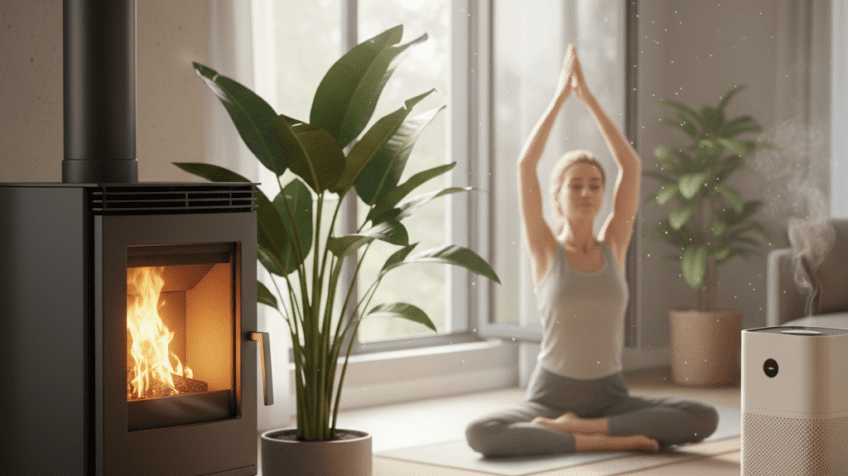
4) Run a HEPA air purifier in the main living area during stove operation. A model with a true HEPA filter captures fine particles that otherwise aggravate asthma and chronic bronchitis.
5) Never burn trash, glue-coated wood, painted scraps, or damp material in your pellet stove; those create toxic emissions and more fine particles.
6) Schedule professional inspection at least once per year and do basic ash removal weekly if you use the stove frequently.
How to choose and maintain a pellet stove for better respiratory health
Choice matters. Pick a stove with a good combustion control system and a well-rated blower. Check for third-party certifications and ask the installer about draft testing — that tells you whether exhaust will flow safely outdoors.
Maintenance is simple but non-negotiable: empty the burn pot and ash tray according to manufacturer guidance (often daily or every few days with heavy use), clean the glass and heat exchanger periodically, and replace gaskets when they show wear so the unit stays sealed.
Professional service should include vent cleaning and inspection of electrical components and safety interlocks. I recommend scheduling that service before the heavy-use season — imagine calling for repair on the coldest night of the year. Not fun.
Holistic health strategies that improve indoor air quality beyond the stove
Being holistic means you don’t just treat the stove, you treat the home atmosphere. Here are five practical steps that work together to protect respiratory health.
1) Balanced ventilation: Use controlled fresh air intake or an ERV/HRV system to bring in filtered outdoor air without freezing the house. It keeps pollutants from concentrating indoors.
2) Filtration: A whole-house MERV 13 filter or a portable true-HEPA unit in bedrooms makes a measurable difference for people with allergies or COPD.
3) Humidity control: Aim for 30% to 50% relative humidity. Too dry irritates airways, too humid encourages mold — both bad for breathing.
4) Low-tox cleaning: Use mild cleaners and avoid aerosol sprays during stove operation. Fragranced products can trigger symptoms for sensitive people.
5) Smoke-free policy: No indoor smoking, ever. Smoking compounds the effects of any stove emissions and significantly worsens respiratory outcomes.
The best part is – these measures are cumulative. Fix one thing and you get some benefit, do three and you often see a real, noticeable difference in symptoms and home comfort.
When to get professional help
Call a pro if you notice persistent cough, repeated nose or eye irritation when the stove runs, visible soot on walls near the stove, or if your CO alarm ever chirps. Also call if the stove smells like burning plastic or chemical odors — that could mean pellets contaminated with binders or the paint on a new stove off-gassing.
If this feels overwhelming, our team can handle it for you — from installation and certified pellet recommendations to ventilation audits and continuous-monitoring setup. We start with a simple test: measure indoor PM2.5 and CO while the stove runs and then give a prioritized action plan (usually 3 to 5 interventions) that fits your home and budget.
Frequently Asked Questions
Are pellet stoves safe for people with asthma?
Yes, often safer than traditional wood-burning options, but safe use matters. Use certified pellets, maintain tight venting, run HEPA filtration, and monitor PM2.5 and CO. Those steps reduce triggers for asthma attacks and make a big difference in symptom control.
Do pellet stoves produce fine particles (PM2.5)?
They can, but less than many older wood stoves when properly installed and fed quality fuel. Fine particles can still escape if seals fail or combustion is poor, so monitoring and maintenance are the keys to minimizing PM2.5 exposure.
Can I use an air purifier with a pellet stove?
Absolutely. A true-HEPA purifier helps capture particles that get past the stove’s containment. Place it in the main living space and run it while the stove operates. For whole-house solutions, upgrade the HVAC filter to MERV 13 and consider an ERV/HRV for fresh, filtered air.
How often should a pellet stove be serviced?
Do basic cleaning regularly (daily or weekly depending on use), and schedule a professional inspection and vent cleaning once per year. If you burn the stove heavily, twice-yearly checks make sense. That routine prevents small problems from becoming pollutant sources.
What are the first steps if I smell smoke indoors?
Ventilate by opening windows if safe, run the purifier, check seals and the vent pipe for obstructions, and shut down the stove if odors persist. Then call a technician to inspect the unit and venting before using again.
Real talk: cleaner indoor air is a mix of good equipment, consistent habits, and a few smart upgrades. Take the simple steps above and you’ll protect respiratory health without losing the comforts of a pellet stove. If you want help prioritizing changes specific to your home, we can run a quick assessment and map out the easiest fixes first.