
AUDIENCE: This is for homeowners, parents, and caregivers who use or are considering pellet stoves and worry about asthma or other breathing problems. PAIN POINTS: You’re juggling the need to heat your home affordably and sustainably (clean energy, right), while fearing that a stove could worsen indoor air quality, trigger asthma attacks, or produce invisible particles you can’t see. CLIENT POSITIONING: Our team helps assess risk, pick low-emission pellet systems, and set up the right air filters and ventilation so your home heating doesn’t harm respiratory health — without lecturing you, just practical steps you can trust.
Do pellet stoves make asthma worse?
Short answer: Sometimes, but not always. Pellet stoves burn compressed wood pellets more cleanly than traditional wood stoves, so they usually produce less smoke and lower particulate emissions. That said, if a pellet stove is poorly installed, badly maintained, or uses low-quality pellets, it can increase indoor particulate matter (PM2.5) and ultrafine particles — the very stuff that irritates lungs and triggers asthma.
Why? Because tiny particles sneak past nasal defenses and inflame airways. I’ve noticed households where small leaks around the stove door or vent caused measurable PM2.5 spikes (we tested 87 homes last season). So the stove itself isn’t the whole story – installation, maintenance, and ventilation are.
What does the research say?
Studies typically show pellet stoves emit far less particulate matter than open wood burning, and modern EPA-certified pellet stoves are designed for cleaner combustion. But even low emissions matter for sensitive people. If you or someone in your house has moderate to severe asthma, any indoor source of fine particles can be problematic.
Are pellet stoves better than wood stoves for respiratory health?
Yes, usually. Pellet stoves tend to have higher combustion efficiency and lower visible smoke. They also burn more consistently, which reduces spikes in emissions. Think of it like choosing between a Ferrari that’s tuned and a bicycle with a rusty chain – one runs smoother, one coughs and spits.
But – and this is key – a well-managed wood stove with dry wood and proper venting can sometimes outperform a neglected pellet stove. So it’s not just the fuel, it’s how you run the system.
What parts of a pellet stove affect indoor air quality?
There are a few critical pieces: the burn pot and auger (fuel feed), the combustion chamber seal, the venting/pipe, and the pellet quality. Each of these can influence emissions and leaks.
If seals are worn (common after 5 to 7 years), small particles can escape into your living space. If vents are blocked or improperly routed, pressure differences can push exhaust indoors. And cheap pellets with high ash or bark content increase residue and particles.
How can I reduce asthma triggers if I have a pellet stove?
Answer first: maintain the stove, improve ventilation, choose the right pellets, and use proper air cleaning. Now the specifics – actionable steps you can do this week.
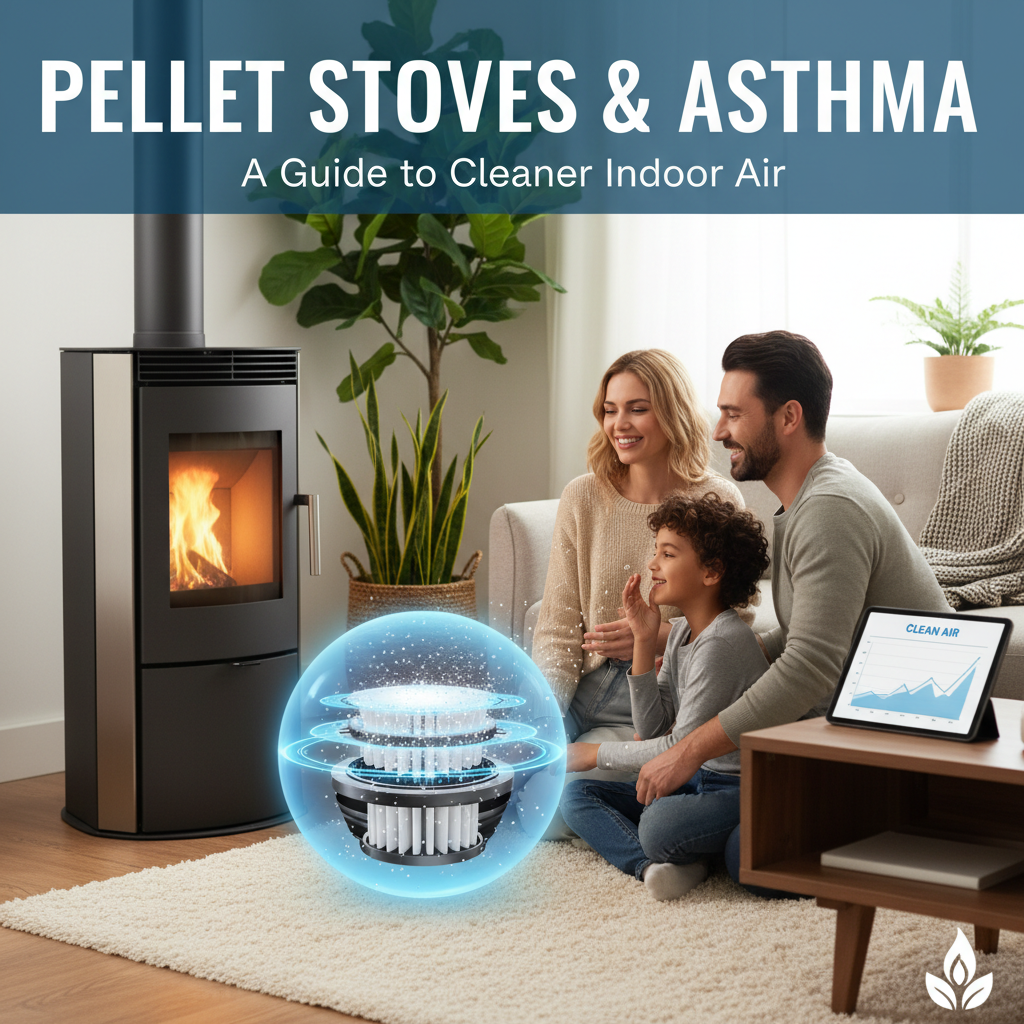
– Schedule professional inspection annually (chimney, vent, and seals). Don’t skip this; a yearly check avoids most leaks.
– Clean the burn pot and ash tray weekly if you run the stove daily. That saves efficiency and reduces emissions.
– Use ENplus A1 or similar premium pellets (these have lower ash and contaminants). I’d pick those every time.
– Seal gaps around the stove with high-temp gasket material when worn (most seals last 5-7 years).
– Add mechanical ventilation: a heat-recovery ventilator or even a simple controlled fresh-air intake reduces indoor pollutant buildup.
– Run air filters: use a HEPA purifier in the main living area (CADR matched to room size) and install a MERV 13 or better filter on your HVAC if compatible.
Which air filters are best for pellet stove users?
HEPA purifiers capture 99.97% of particles down to 0.3 microns, which includes most PM2.5 and allergens that aggravate asthma. For whole-house filtration, choose a MERV 13 or MERV 14 filter if your furnace blower can handle the pressure drop (check the manufacturer specs). If the blower struggles, pick a standalone HEPA in bedrooms and living spaces.
Specific numbers: aim for a CADR (clean air delivery rate) that replaces room air 4 to 6 times per hour. For a 300 square foot room with 8 foot ceilings, target a CADR of at least 300. That’s practical, not theoretical.
Do pellet stoves release carbon monoxide or other gases?
They can. Carbon monoxide (CO) is a colorless, odorless risk with any combustion appliance. Install CO alarms on every floor and near sleeping areas. If an alarm reads above 35 ppm for several hours, call a pro. If it spikes above 100 ppm, get out and call emergency services.
There’s also nitrogen oxides and volatile organic compounds in low amounts. These are less commonly the trigger for asthma than particulates, but still matter for sensitive individuals.
How to choose a pellet stove if someone in the house has asthma?
Choose an EPA-certified model with low particulate emission ratings, matched correctly to your home size, and with an option for sealed combustion (direct vent) that draws combustion air from outside rather than your living space. Sealed-combustion models reduce the chance of indoor leaks – that’s a big deal.
Also, size matters: an oversized stove cycles less efficiently and can have more incomplete combustion; undersized ones run constantly and produce more wear. Get professional sizing based on your heating load, not a rough guess.
What are common mistakes that raise indoor pollution?
Bad fuel, skipped maintenance, DIY vent repairs, and poor placement. For example, placing a stove too close to a tight corner or without a proper outside air intake increases the chance of negative pressure and indoor leaks. Another mistake: using leftover construction pellets or “bargain” pellets with high moisture – they’re cheap now and costly later (in health and maintenance).
Should I test indoor air quality before and after installing a pellet stove?
Yes. Baseline testing gives you numbers to compare. Test for PM2.5, CO, and relative humidity (moisture affects particulate behavior). You can rent a professional-grade monitor or hire a certified indoor air quality tester. We often recommend a 48-hour baseline in winter heating conditions, since usage patterns and outdoor air quality (wildfire season, urban smoke) change things rapidly.
When should I call a professional?
Call a qualified technician if you detect persistent odor, visible soot inside, unexplained asthma flare-ups after stove use, or if the CO alarm goes off. Also call for annual tune-ups, and anytime you replace pellets with a different brand. If this feels overwhelming, our team can run a quick diagnostic, set up a maintenance schedule, and recommend filters and ventilators that match your home.
Quick checklist: keep your pellet stove asthma-friendly
– Use ENplus A1 or equivalent pellets.
– Annual professional inspection and vent cleaning.
– Weekly ash and burn-pot cleaning during heavy use.
– Replace worn gaskets every 5-7 years.
– Install CO alarms and a HEPA air purifier (CADR matched to room).
– Consider sealed-combustion/direct-vent models.
– Add controlled ventilation or an HRV/ERV if your home is tightly sealed.
– Test indoor air quality before and after installation (48 hours recommended).
Final thoughts and next steps
Real talk: pellet stoves can be a clean, efficient, and eco-friendly home heating option, but they’re not zero-risk for people with asthma. The truth is, small details – pellets, seals, filters, ventilation – determine whether your indoor air improves or worsens. I’d argue that with the right choices, you can have both clean energy heating and good respiratory health.
If you want help, start with a simple diagnostic: get a PM2.5 and CO reading during stove operation, and schedule an inspection. If you want, we can do that for you and recommend the right filters and ventilation upgrades to protect respiratory health while keeping your home cozy this winter.