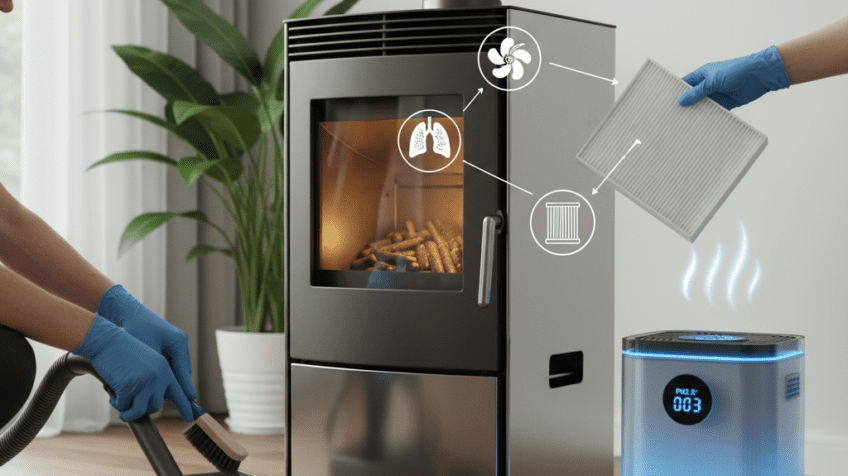
For homeowners, renters, and building managers who rely on pellet stoves for heat, this is for you — especially if you’ve been worrying about coughing, persistent dust, or worsening allergies when the stove’s running. You might not know whether your maintenance routine is enough to protect indoor air quality and respiratory health (and that uncertainty is stressful). Our technicians help people with practical, step-by-step maintenance plans, safety checks, and ventilation fixes so you can keep the warmth without trading it for poor lung health — no hard sell, just real, actionable support.
How can a pellet stove affect lung health and indoor air quality?
Short answer: through fine particles, gases, and poor circulation. Pellet stoves produce combustion byproducts — tiny particulates (PM2.5), carbon monoxide (CO), and some volatile organic compounds (VOCs) — and if the stove, venting, or room airflow aren’t right, those pollutants can build up indoors.
Why care? PM2.5 is the biggest issue: these particles are small enough to reach deep into the lungs and even the bloodstream. The EPA sets a 24-hour PM2.5 standard of 35 µg/m3 — a useful benchmark when you’re checking air quality. I’ve noticed in tight homes with dirty vents that indoor PM2.5 can spike well above that during startup and when ash is disturbed (that’s when people cough).
Common symptoms and risks
- Short-term: coughing, wheeze, eye irritation, headaches, throat scratchiness.
- Long-term: worsening asthma, bronchitis flare-ups, and other respiratory conditions — especially for kids, older adults, and people with preexisting lung disease.
- Warning signs: soot on walls, lingering smoke smell, frequent filter clogging, or a carbon monoxide alarm going off.
Pellet stove maintenance checklist to protect lung health
Think of maintenance like preventive medicine. It’s better to do regular small tasks than to wait for a problem that costs an arm and a leg.
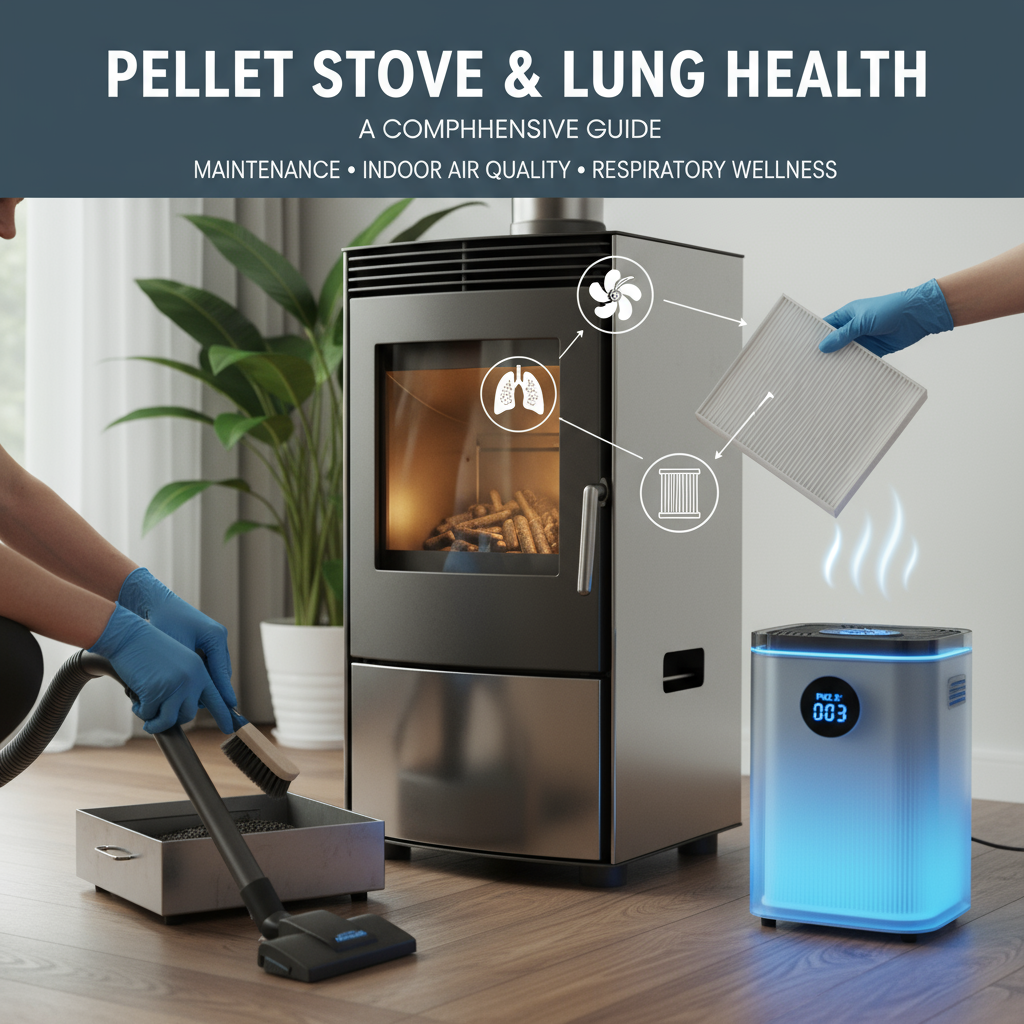
- Daily: Empty the burn pot and remove large clinker chunks — 1 minute when the stove’s cool.
- Weekly: Remove ash from the firebox and ash drawer. Use a HEPA-rated shop vac or vacuum designed for ash (never a household vacuum).
- Monthly: Clean or vacuum the stove’s convection air channels and heat exchanger (if accessible). Check gaskets for wear.
- Every 6–12 months: Deep clean the exhaust vent and chimney; inspect for creosote or blockages. Replace worn door gaskets and blower seals.
- Annually: Have a qualified technician perform a full safety inspection — combustion efficiency, vent integrity, pellet feed system, and CO testing.
Step-by-step: safe cleaning that reduces indoor dust
So here’s the thing about cleaning — do it wrong and you’ll release a cloud of fine ash. Do it right and your air stays clean.
- Turn the stove off and let it cool for at least 4 hours (overnight is better).
- Wear an N95 mask, gloves, and eye protection (don’t skip this).
- Empty ash into a metal container with a lid; store outside until fully cool — ash can smolder for days.
- Use a HEPA-rated ash vacuum for the firebox and vents; wipe surfaces with a damp cloth to catch residual dust.
- Inspect door gaskets and seals — replace if brittle or compressed (a poor seal raises emissions).
Filter replacement: which filters matter and how often?
Filter work divides into two camps: the stove’s internal filters/blowers and the home’s air filters.
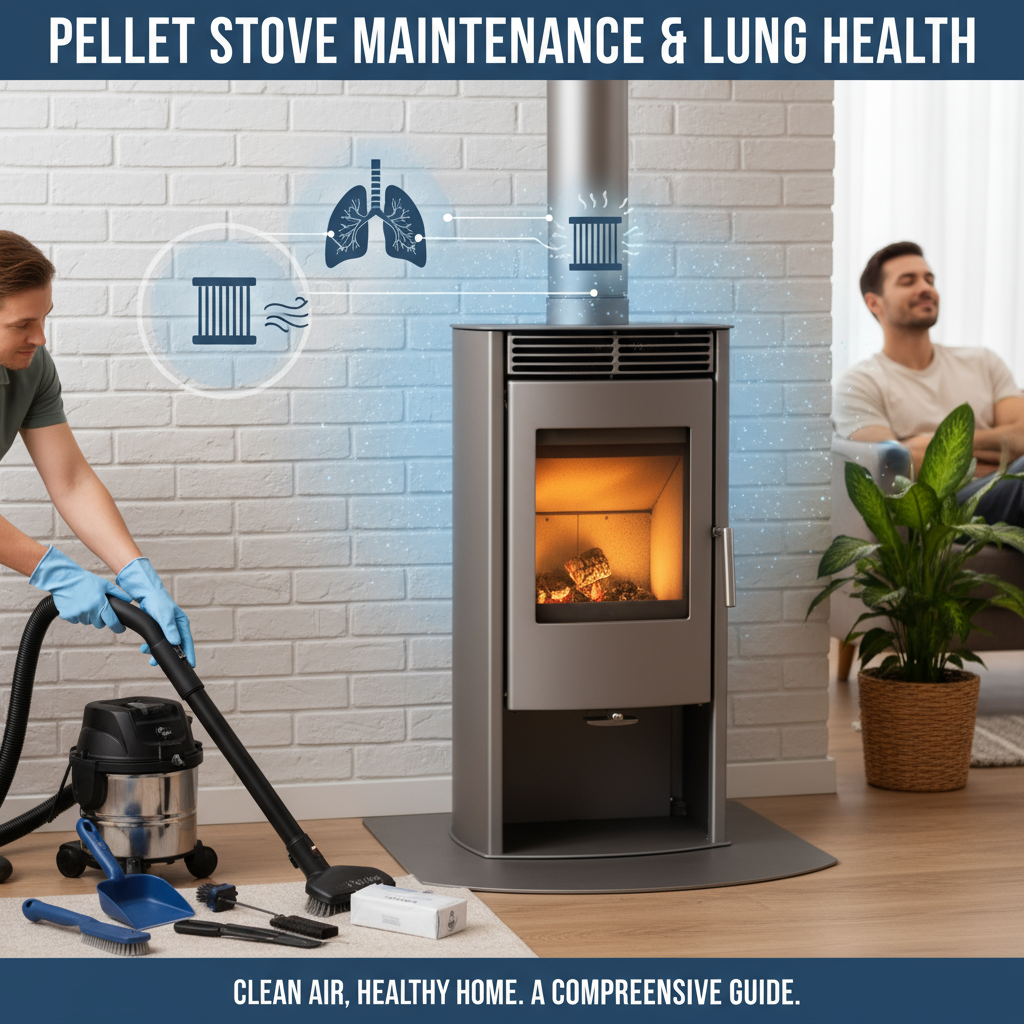
- Stove blower filters: Some stoves have intake or blower filters — vacuum monthly and replace every 3 months or as the manual recommends. If you see visible dust after one month, shorten the interval to 6 weeks.
- Home HVAC filters: Use at least a MERV 8 for basic protection, MERV 13 or a true HEPA if someone has asthma. Replace HVAC filters every 90 days or sooner if you have pets or heavy stove use.
- Portable air purifiers: If you run a portable HEPA purifier in the room with the stove, replace its filter per the manufacturer (often every 6–12 months) and keep CADR suited to room size.
From what I’ve seen, a simple change like swapping to a MERV 13 HVAC filter plus a small HEPA purifier cuts indoor PM2.5 dramatically — it’s like choosing between a Ferrari and a bicycle for filtration (the Ferrari being the HEPA). People notice fewer sneezes within days.
Ventilation upgrades and quick fixes for safer air
Ventilation is where a lot of homes cut corners. The exhaust must get outside, and fresh air must replace what leaves.
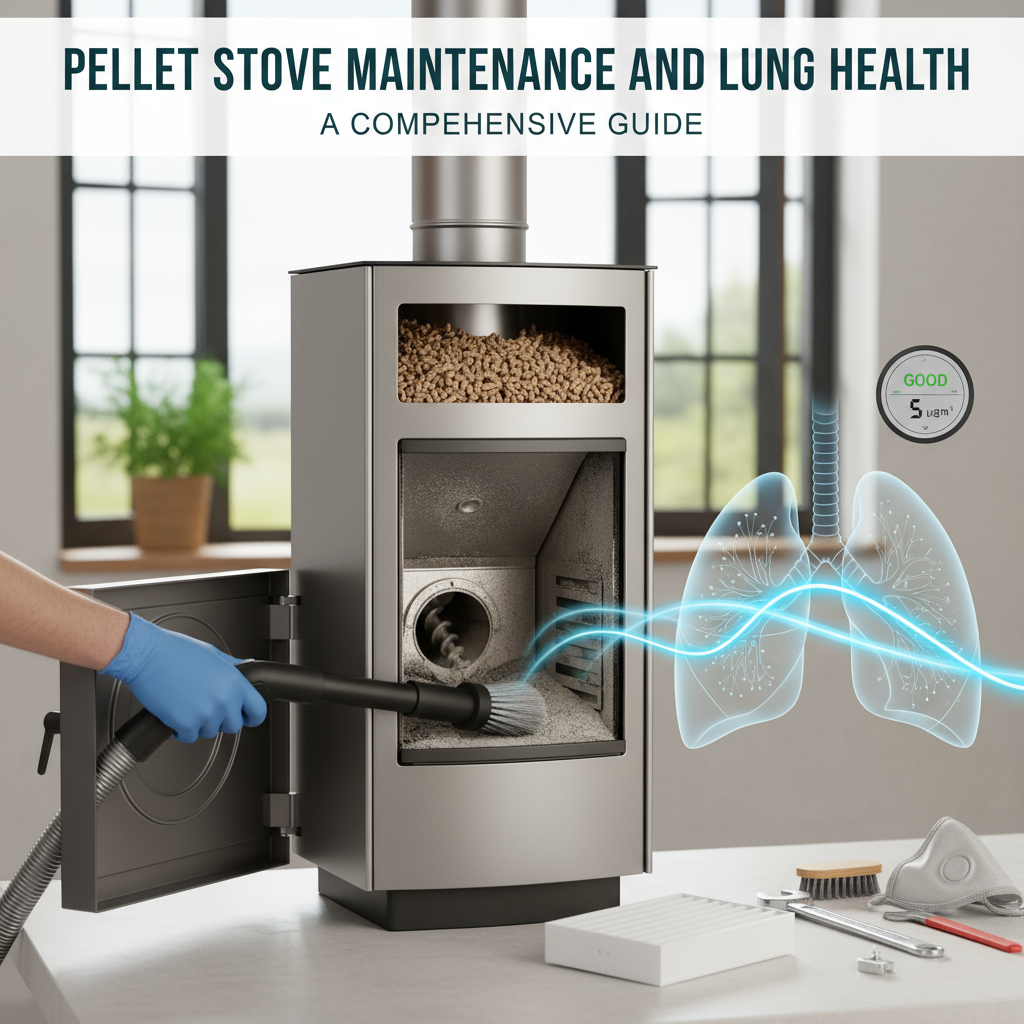
- Ensure the stove’s vent pipe is properly sealed and slopes outward to prevent backdrafts.
- Install a CO alarm and a smoke alarm on each floor — test monthly.
- Consider an ERV/HRV system if your house is very tight — it brings in filtered fresh air without losing much heat.
- Open a window briefly during startup if indoor CO or smoke is a problem (short bursts are surprisingly effective).
- Use high-quality pellets (low moisture, certified) — poor pellets create more ash and emissions.
When to call a professional
If you notice persistent smoke indoors, soot buildup on ceilings, frequent CO alarm activations, or if your stove’s efficiency drops (more pellets burned for the same heat), call a pro. Also call if you’re uncomfortable doing deep clean or vent work yourself — safety first.
If this feels overwhelming, our team can handle inspections, vent cleaning, and a tailored maintenance plan that keeps your stove running clean and your lungs safer — we’ll even show you simple daily habits to keep things under control.
FAQs
Can a pellet stove cause asthma attacks?
Yes — especially if the stove or venting is dirty. Fine particulates and irritant gases can trigger asthma. Proper cleaning, sealing, and air filtration reduce that risk considerably.
How often should I clean the exhaust pipe and chimney?
Have the exhaust and chimney inspected and cleaned at least once per heating season, more often if you burn heavily (more than 6 hours a day) or use poor-quality pellets.
Are HEPA air purifiers worth it with a pellet stove?
Absolutely. A HEPA purifier in the main living area captures PM2.5 and allergens that the stove may produce — it’s one of the fastest ways to lower your indoor particulate levels.
What personal protective equipment should I use when cleaning?
Use an N95 respirator, gloves, and eye protection. Also use a metal ash container to store cooled ash outside — never a plastic bag or indoor trash can.
Do pellet stove upgrades (new fans, seals) improve indoor air quality?
Yes. Replacing worn gaskets, upgrading blowers for better combustion air, and ensuring proper vent sealing all reduce leakage and emissions, so the stove runs cleaner and your indoor air improves.