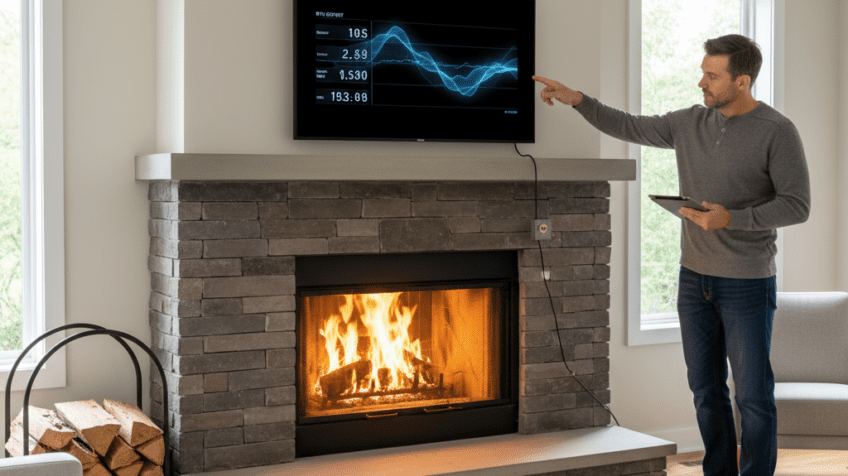
For homeowners weighing heating options (you, if you’re wondering whether that gorgeous masonry fireplace is actually wasting money), here’s the blunt truth: many traditional fireplaces are aesthetically pleasing but frustratingly inefficient — they can pull warm air up the chimney, draft cold in, and leave you reaching for the thermostat. If that stress sounds familiar — rising fuel bills, cold corners, and the feeling you’re burning money — bestpelletstoves.com can help you assess realistic performance and choose higher‑efficiency alternatives without losing the hearth’s charm. Learn more about higher-efficiency alternatives.
Are traditional fireplaces efficient?
Short answer: no, not usually. An open masonry fireplace often delivers roughly 8% of the fire’s heat to the room (I’ve seen the number cited in tests and in my experience that tracks with real homes). So most of the energy escapes up the chimney or is replaced by cold makeup air—basically you’re lighting a lovely focal point that’s mainly a ventilation point.
What “efficiency” means here
Efficiency is the percentage of the fuel’s heat that actually warms the living space. For a fireplace that means: how much of the wood’s energy stays in the room vs. how much goes up the flue. Open fireplaces are assessed differently than closed‑combustion systems—so you can’t treat them the same. Learn more about closed-combustion systems.
Why are fireplaces so inefficient?
Multiple reasons. Draft physics. Design flaws. Human behavior.
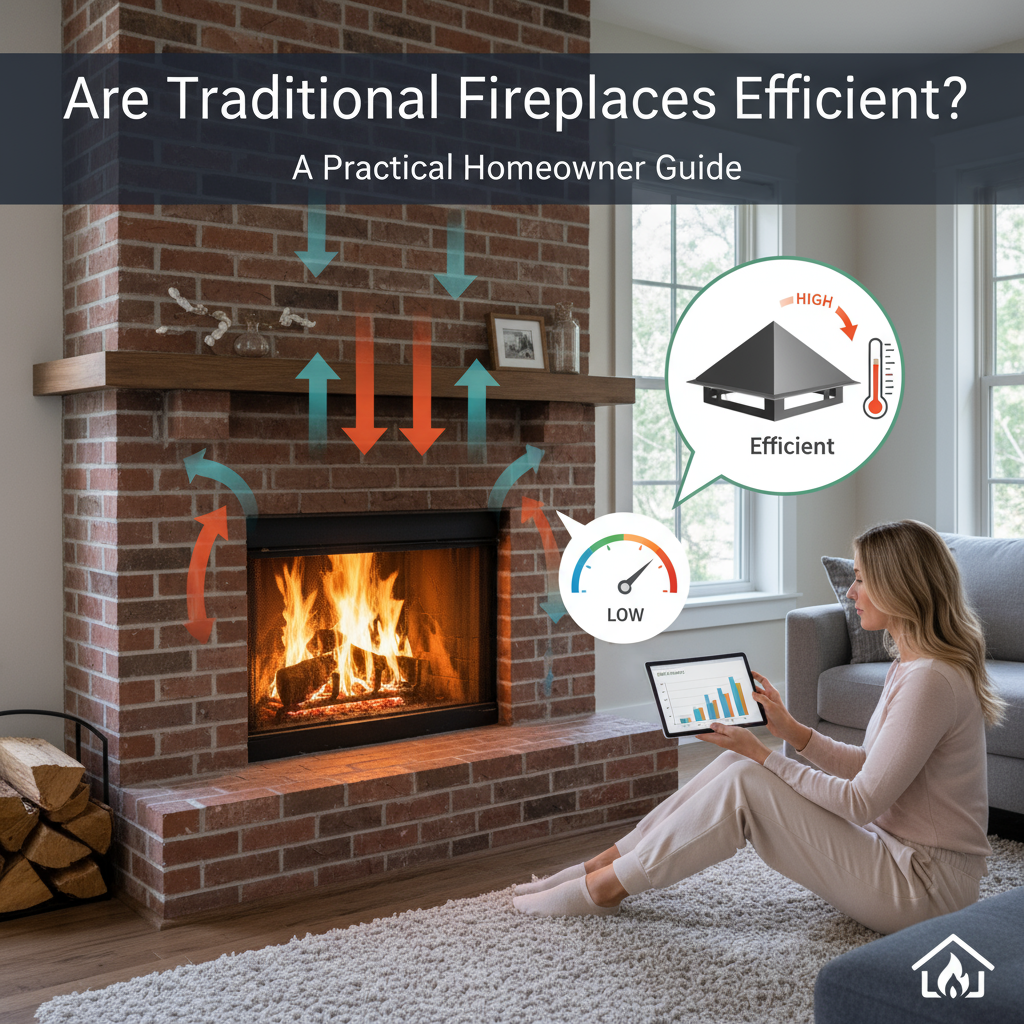
- Drafts: Hot gases rise up the chimney (that’s the whole design), and they drag room air with them. The result: the fireplace becomes a blower—sucks warm air out and draws cold air in via gaps and vents.
- Incomplete combustion: Open fires burn at lower, less controlled temperatures—so more energy is lost as smoke and unburned particles.
- Heat concentration: Most radiant heat goes straight out into the room for people close to the hearth, but convective heat (what actually warms the whole room) is minimal.
How do we know? (A quick, practical look)
I’ve visited homes where owners think they’re heating the house. Thermostat says otherwise. You can feel warmth near the fire but the opposite corner is 8 degrees cooler (Celsius) or 15 degrees cooler (Fahrenheit)—depends where you are. Numbers matter, and measurement often shows the romance isn’t efficient heating.
How to improve traditional fireplace efficiency
You don’t have to demolish the hearth to get better performance. There are smart, practical fixes.
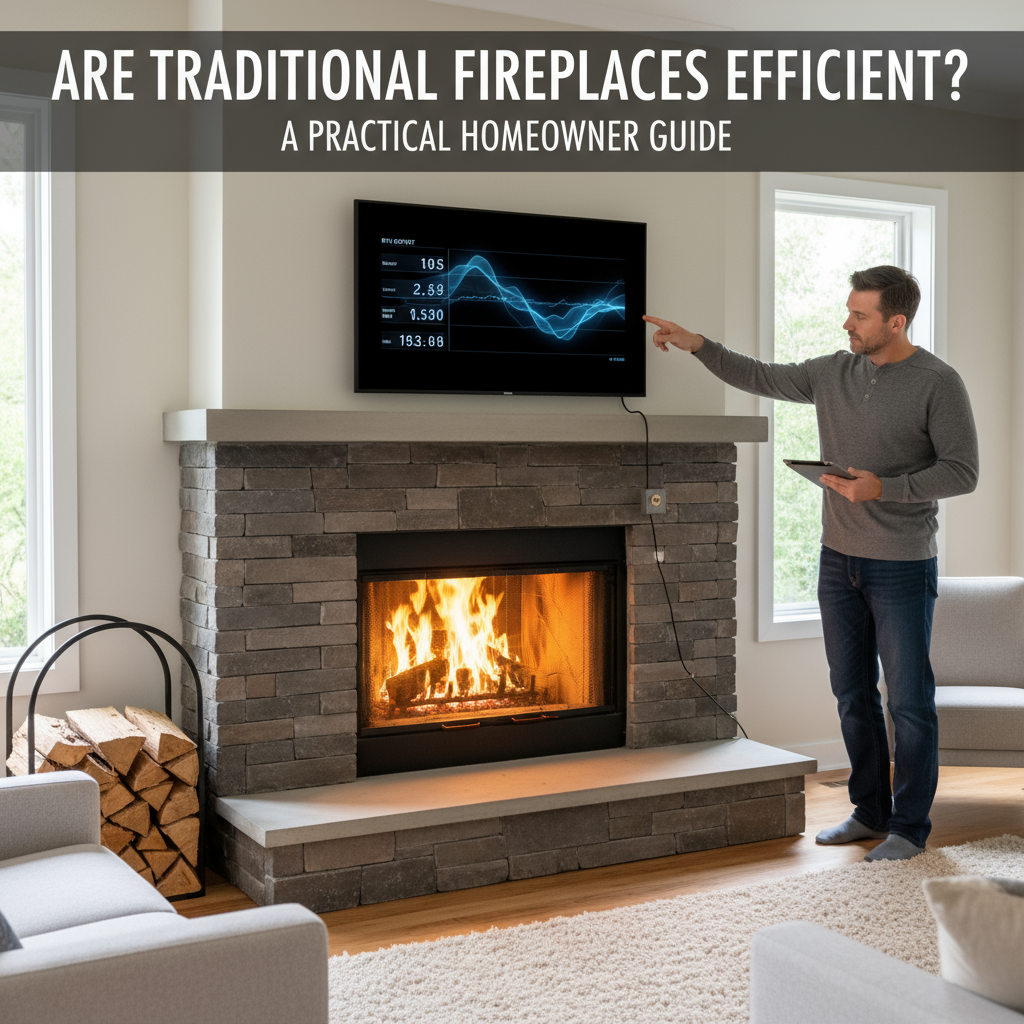
- Install a glass door and tight damper—sealed doors reduce the air that gets pulled down the room and up the chimney (this alone can bump useful heat a lot, in my experience).
- Add a fireplace insert (wood or gas): an insert converts an open firebox into a closed combustion chamber with a blower—this typically brings room heating into the 60% range for many installs.
- Use a heat‑circulating grate with a fan: forces convective heat into the room instead of letting it go straight up the flue.
- Chimney balloon / top‑sealing damper: prevents cold downdrafts when the fire’s out—easy win for drafts and air leakage.
- Burn seasoned kiln‑dried wood only—dryer fuel burns hotter and cleaner, so more energy is released as useful heat instead of smoke.
Are fireplaces efficient compared to alternatives?
Look: traditional open fireplaces are like a convertible on a snowy day—beautiful but not the practical choice for core heating. A modern pellet stove or EPA‑certified wood stove can achieve 70% useful heat or more (I’ve seen certified wood stoves rated 75% in lab tests). Pellet stoves are particularly consistent (automatic feed, stable burn temperature) and often outperform an open fireplace by a wide margin.
If you want the look of a fire but the efficiency of a heater, consider a direct‑vent gas insert or a pellet stove. They keep combustion isolated, control airflow, and reduce losses—so your energy dollar goes further. If this feels overwhelming, bestpelletstoves.com can walk you through options, sizing, and installation considerations based on your floor plan and goals.
How to decide: keep, upgrade, or replace?
Ask these questions:
- Do you want occasional ambiance or regular heat? (Occasional = keep but seal; regular = upgrade.)
- Is ducted HVAC adequate? If not, a high‑efficiency insert or pellet stove is a practical retrofit.
- What’s your budget vs. expected savings? (A quality pellet stove often pays back faster than you think—I’ve seen paybacks in under 4 years in some cases.)
Final practical tip: get a blower or insert quote and compare estimated heat output (BTU) to room size. That’s the simplest way to stop guessing and start fixing the inefficiency.
FAQ
Are fireplaces efficient for whole‑house heating?
No. An open fireplace won’t heat a whole house effectively—it’s mostly local radiant heat. For whole‑house needs, a high‑efficiency stove, pellet stove, or central heating system is better.
Does a fireplace insert make a big difference?
Yes. An insert converts wasted chimney losses into useful heat. It also improves combustion and can include a blower to push warm air into the room—big real‑world improvement.
Can sealing the chimney help when the fireplace isn’t in use?
Absolutely. A top‑sealing damper or chimney balloon stops cold drafts and energy loss when the fireplace is idle—easy, inexpensive energy savings.
What’s the most efficient option that still looks like a fireplace?
A direct‑vent gas insert or a pellet insert gives the visual appeal of flames with controlled combustion and far higher efficiency than an open hearth. If you’d like, bestpelletstoves.com can match models to your aesthetic and heating needs.